Last updated 2026-08-14
TL;DR
Searching "mosquito control company near me" gets you a list of ads, not answers. A good local company offers a free yard assessment, treats on a 10-14 day barrier cycle during your active season, targets standing water first, and gives you an EPA-registered product label on request. Expect $50-100 per visit or $400-1,200 per season depending on lot size and region.
What should a mosquito control company near me actually do on the first visit?
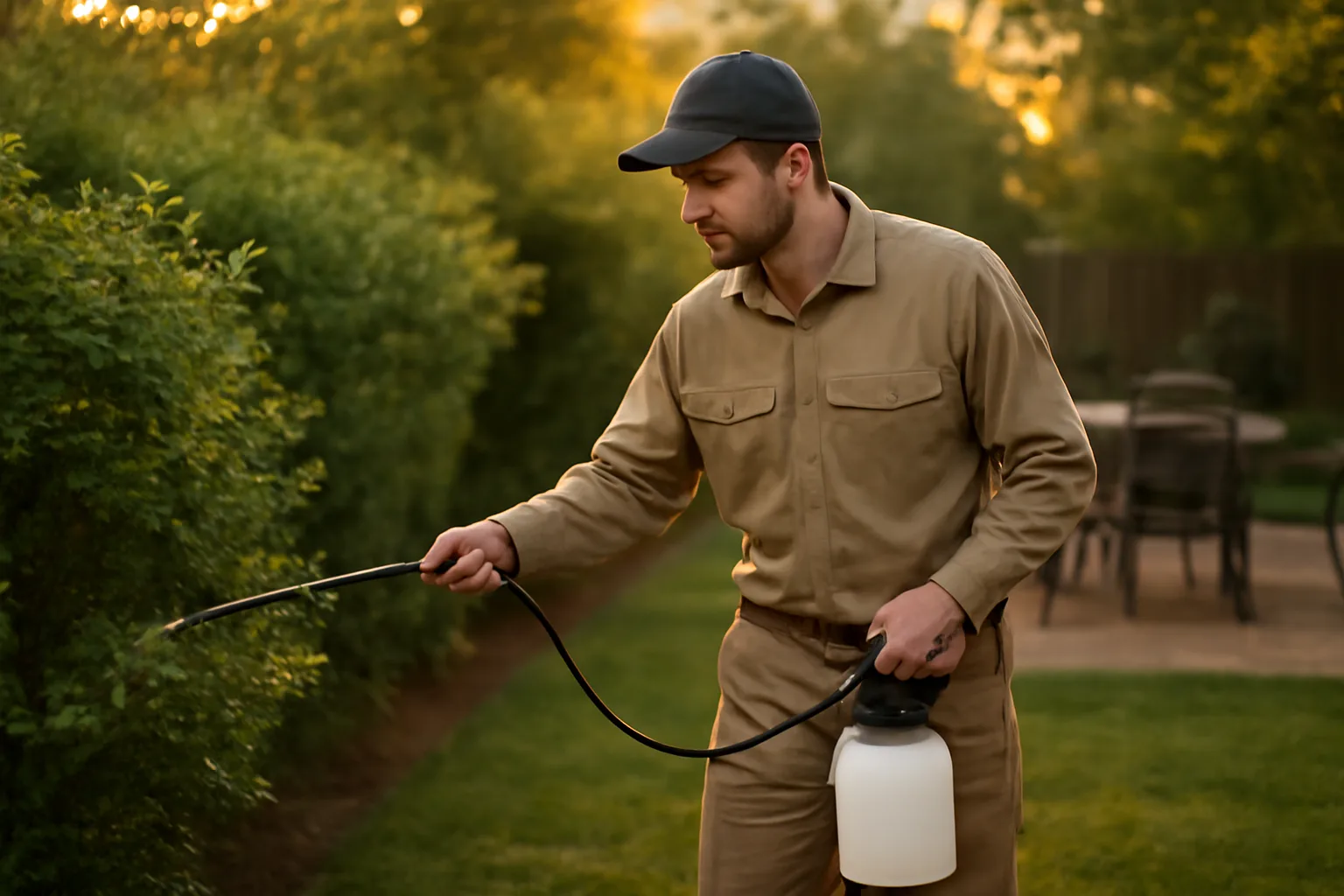
A real first visit starts with a walk of your property, not a sales pitch on the porch. The technician should look for standing water (gutters, tarps, plant saucers, low spots that hold rain), identify vegetation where adult mosquitoes rest during the day (dense shrubs, ivy, tall grass along fence lines), and ask about your yard's use pattern, kids, pets, pool, garden beds near the house. That assessment should be free. If a company wants money before they've told you what's on your property, that's a red flag, not a red flag in a subtle way, a real one. From there, a legitimate outfit proposes one of two things: a seasonal barrier treatment on a repeat cycle, or an installed misting system for properties where the owner wants automated, more frequent low-dose application. Neither approach eliminates mosquitoes. Both knock the population down enough that you can sit outside without getting eaten alive. Ask to see the product label before anything goes on your lawn. Under federal law, pesticide products must be registered with the EPA and used according to that label; a technician who can't produce it or explain the active ingredient hasn't done their homework [1]. Most yard barrier products use synthetic pyrethroids like bifenthrin or permethrin, applied to vegetation, mulch beds, and shaded resting sites.
How to get rid of mosquitoes in the yard for good
You can't get rid of them for good. Nobody can, and any company promising eradication is overselling. What you can do is drop the population enough that evenings outside stop being miserable, and keep it there with routine maintenance. The first move costs nothing: dump standing water. The CDC is blunt about this, stating that mosquitoes "lay eggs near water" and that reducing standing water around the home is one of the most effective steps a homeowner can take [2]. Check anything that holds water for more than four or five days: clogged gutters, kiddie pools, saucers under potted plants, tarps with a low spot, old tires, birdbaths that don't get changed weekly. A single bottle cap of water is enough for Aedes aegypti to complete its larval stage. Second, treat the vegetation. Adult mosquitoes rest on the undersides of leaves in shaded, humid spots during the heat of the day. A barrier spray targets that harborage along with high grass, mulch beds, and fence lines, more than open lawn. This is where a professional 10-14 day cycle earns its keep. The pyrethroid barrier degrades with UV exposure and rain, so a one-time treatment fades in a couple of weeks. Re-treating on that cycle keeps a working residual on the vegetation through the season. Third, look at biological options if you have any water features you can't drain, ponds, rain barrels, or ornamental fountains. Mosquito dunks containing Bti (Bacillus thuringiensis israelensis) kill larvae without harming fish, pets, or beneficial insects when used per label, and EPA fact sheets describe Bti as having low toxicity to non-target organisms under labeled use [3]. A mosquito control plan that combines all three, source reduction, a repeat barrier cycle, and larvicide in standing features, is the actual answer to "how to get rid of mosquitoes." Any one alone underperforms.
How to keep mosquitoes away without spraying your whole yard
If you don't want a full barrier program, you still have real options, they're just less effective per square foot. Personal repellents matter more than most people think. The EPA and CDC both point to registered active ingredients with a track record: DEET, picaridin, IR3535, and oil of lemon eucalyptus (OLE) all show effectiveness in repelling mosquitoes when applied per label directions, and the CDC maintains a searchable tool for choosing an EPA-registered repellent by ingredient and protection time [4]. DEET concentrations above roughly 30% don't add much longer protection, they just plateau; the marginal gain from 30% to 100% DEET is small according to EPA-reviewed data [4]. Fans work better than most sprays for patio dining. Mosquitoes are weak fliers, most species top out around 1 to 1.5 mph, so a box fan or ceiling fan moving air across a seating area does real work at zero recurring cost. Timing your outdoor hours helps too. Many common backyard species (Culex, Aedes) are most active at dawn and dusk, though Aedes aegypti and Aedes albopictus, the two species that carry Zika and dengue in the US, bite aggressively during the day as well [5]. If you're trying to avoid bites without any treatment, avoiding peak activity windows and wearing long sleeves in high grass areas cuts exposure meaningfully. None of this replaces treating the yard itself if the pressure is bad enough that you're avoiding your own patio. That's the point where a mosquito repellent on your skin stops being enough and a property-level plan starts making sense.
What plants repel mosquitoes, and is a mosquito repellent plant worth planting?
Plants like citronella grass, lemongrass, lavender, marigold, and catnip are commonly labeled "mosquito repellent plants" because they contain aromatic oils mosquitoes seem to avoid. The honest answer on whether they work: modestly, and only right around the plant, not across a yard. The oils inside these plants (citronellal, geraniol, linalool) show measurable repellent activity in lab settings when extracted and concentrated, similar to how citronella candles and oils are formulated. But an intact, growing plant releases very little of that oil into the air compared to a crushed leaf or distilled product. University extension guidance generally treats ornamental "repellent plants" as a minor supplement, not a stand-alone control method; a bed of lemongrass along your patio might reduce mosquitoes drifting through that immediate zone, but it won't touch the population breeding two yards over or resting in your shrubs [6]. If you like the plants anyway, put them in containers near seating areas, not the whole yard. Crush a leaf and rub it if you want the field-expedient version of the effect. But don't skip source reduction or a real barrier treatment because you planted marigolds. For readers who want a rundown of ingredient-level options beyond plants, a look at natural mosquito repellent formulations covers what has real supporting data versus what's mostly folklore.
How to get rid of mosquitoes in the house
Indoor mosquitoes almost always mean one of two things: they're getting in through a gap, or they're breeding somewhere inside, most commonly a clogged drain, an overwatered houseplant saucer, or a forgotten container of standing water. Start with entry points. Check window screens for tears, make sure door sweeps seal fully, and look at any exterior vents or utility penetrations. A single quarter-inch gap around an AC line is enough for mosquitoes to get through repeatedly. Next, hunt for indoor water. Empty plant saucers after watering, check under-sink areas for slow leaks, and look at anything that holds standing water for multiple days, that includes vases with old flower water. If you have a sump pump pit or a floor drain that stays damp, that's a common overlooked breeding site in basements. For mosquitoes already inside, a fly swatter, a plug-in indoor insect trap, or a short-term aerosol labeled for indoor flying insect use handles the immediate problem. Indoor foggers and residual sprays should always be used strictly per label instructions; overuse indoors, in a closed space, with people or pets present, is a real health risk, not a theoretical one. If mosquitoes keep showing up in the house despite sealed entry points and no obvious indoor water, the source is very likely outside near an entry, meaning the yard-level fix (standing water removal, vegetation treatment) will do more than anything applied indoors.
When do mosquitoes go away for the season?
It depends entirely on your climate, and there's no single national date, so check your local extension office or health department for your specific range. As a general pattern, most mosquito species in temperate US climates need temperatures consistently above roughly 50°F (10°C) to stay active; sustained temperatures below that slow reproduction and adult activity sharply, and a hard frost typically ends the season for adult mosquitoes in that region [7]. In the northern US and much of the upper Midwest, that often means October through April is quiet. In the Gulf Coast, Florida, and much of the Southwest, mosquitoes can stay active year-round in mild winters, with only brief lulls during cold snaps. Mosquitoes don't actually disappear over winter, most species overwinter as eggs (laid in a spot that will flood come spring) or as adult females in diapause, a dormant state, tucked into protected spots like culverts, tree holes, or crawl spaces . That's why the first warm stretch in spring, sometimes a single week in the 60s, can trigger a noticeable hatch. This regional variability is exactly why a one-size treatment calendar doesn't work well. A barrier program timed to your local season, starting a few weeks before your typical first-bite date and running through your first hard frost, covers the window that actually matters instead of wasting early or late-season visits.
How to get rid of mosquitoes in the backyard, step by step
Here's the order that actually works, roughly in priority: 1. Walk the property and dump every container holding standing water. Do this weekly, not once. 2. Clean gutters. A clogged gutter holding an inch of leaf debris and rainwater is one of the most productive mosquito breeding sites on a typical lot. 3. Treat unavoidable water features (ponds, rain barrels, unused pools) with a Bti-based larvicide, applied per label [3]. 4. Cut back dense, low vegetation and mow regularly; mosquitoes rest in shaded, humid cover during the day. 5. Apply or hire a barrier treatment to shrubs, mulch beds, and shaded fence lines on a repeat cycle, roughly every 10-14 days during active season, since the residual breaks down with sun and rain. 6. Add a fan to your main seating area for immediate relief on evenings you're actually outside. 7. Consider an installed misting system if your lot has heavy tree cover, standing water you can't fully eliminate (a creek, a low wet corner), or if you host outdoor events often enough that a set-and-forget system pays for itself in convenience. For most suburban quarter-acre to half-acre lots, steps 1 through 5 handle the bulk of the problem. Misting systems make more sense on larger, harder-to-reach properties or for homeowners who want it automated and don't want to think about the calendar. Either path benefits from a professional assessment first; a mosquito control near me search should get you a company willing to look at your specific lot before quoting anything.
How to get rid of ticks in the yard
Ticks and mosquitoes share some yard-control overlap but ticks live and breed differently, so the fix isn't identical. Ticks quest from vegetation, they climb grass or shrub edges and wait with front legs extended for a host to brush past; they don't fly or jump. The CDC and university tick research point to the same core yard interventions: keep grass mowed short, clear leaf litter and brush, and create a barrier of wood chips or gravel, typically a 3-foot-wide strip, between lawn and wooded or brushy areas, since ticks rarely cross a dry, exposed strip like that . This border matters most where a lawn meets woods, a stone wall, or an overgrown fence line, exactly the zones where deer and rodent hosts move through. Stack firewood neatly and off the ground, keep play equipment and seating away from yard edges, and manage rodent populations (mice and chipmunks are a primary host for immature blacklegged ticks, which carry Lyme disease). Deer fencing, where practical, reduces the number of adult ticks a yard receives from passing deer. Professional tick treatments use similar acaricide products to mosquito barrier sprays, applied to the same perimeter zones, tall grass edges, leaf litter, stone walls, woodland borders, rather than open lawn. A combined mosquito and tick barrier program often treats both in the same visit since the target zones overlap heavily. For repellent options you wear rather than spray on the yard, tick repellent covers what's actually effective on skin and clothing, including permethrin-treated clothing, which the EPA notes retains effectiveness through multiple washes when factory-treated .
How do you get rid of ticks from your yard specifically, versus just avoiding bites?
Getting ticks off your property (rather than just avoiding them personally) means reducing the habitat that supports their life cycle, more than spraying once and hoping. Start with the 3-foot dry barrier mentioned above between lawn and woods or brush; this single landscaping change is one of the most cited yard-level interventions in tick management guidance because it interrupts the questing zone where ticks wait for hosts . Mow regularly and keep grass under about 3 inches; ticks in tall grass have better humidity retention and easier access to passing hosts. Clear leaf litter every fall, especially under trees at the yard's edge, since blacklegged tick nymphs (the life stage responsible for most Lyme disease transmission) shelter and overwinter there. Relocate bird feeders away from the house; they draw in rodents and deer, both major tick hosts. For an existing infestation, a professional acaricide application to the identified questing zones, timed to your region's tick activity season, does more in one visit than DIY yard sprays typically manage, mostly because commercial applicators have access to formulations and equipment calibrated for perimeter and vegetation coverage rather than broad lawn spraying, which is largely wasted effort against ticks anyway since they're rarely out on open, mowed grass.
What does professional mosquito control typically cost?
| Single barrier treatment | $50-$100 per visit | One-time or event-based | |
|---|---|---|---|
| Seasonal barrier program | $400-$1,200 per season | Every 10-14 days during active season | |
| Installed misting system | $2,500-$6,000+ installed | Automated, plus refill/service cost | |
| DIY backpack sprayer + product | $50-$150 total | Homeowner-applied, variable frequency | These figures reflect general industry ranges reported by pest control trade sources and vary by local labor cost, lot acreage, and how much vegetation needs coverage. A quarter-acre suburban lot with light shrubs costs less to treat than a wooded acre-plus property with a pond and heavy tree line. The honest tradeoff: a seasonal program with a technician returning every 10-14 days catches the residual breakdown before mosquitoes rebound, while a single one-time spray fades within about two weeks and does nothing for the rest of the season. If your goal is actually usable evenings outside for months, more than one weekend event, the repeat cycle is where the value is, not the one-time treatment. |
Pricing varies by region, lot size, and vegetation density, so treat these as typical ranges rather than a quote. | Service type | Typical cost | Frequency |
What should I ask before hiring a mosquito control company near me?
A short list of questions separates a real operator from a truck with a tank and a logo. Ask what active ingredient they use and whether it's EPA-registered for outdoor residential use; they should answer without hesitation and offer the label. Ask whether the treatment targets vegetation and resting sites specifically, more than a blanket lawn spray, since that's where adult mosquitoes actually rest during the day. Ask about the treatment cycle, 10-14 days is standard for barrier residuals given UV and rain breakdown, and be wary of anyone proposing monthly visits as sufficient for active season control. Ask whether the first visit includes a standing-water inspection, more than a spray. Ask what happens in heavy rain weeks, do they re-treat sooner if a storm washes out a recent application. And ask directly whether they promise elimination; the correct, honest answer is population reduction and management, not eradication, since no yard treatment removes mosquitoes permanently, they migrate back in from neighboring properties and surrounding habitat continuously. At Duskproof, our process starts with a free yard assessment where a technician walks the property, flags standing water and resting sites, and proposes either a seasonal barrier plan on the 10-14 day cycle or an installed misting system depending on the lot. There's no online checkout and no upsell menu, just a quote based on what your yard actually needs. You can get a free yard assessment to see what that looks like for your property specifically.
Frequently asked questions
How do I get rid of mosquitoes fast before an outdoor event?
Dump all standing water 24-48 hours ahead, run fans on the patio (mosquitoes are weak fliers and can't handle moving air), and consider a same-week barrier treatment from a local company, since a fresh application knocks down resting adults within hours. A single treatment fades in about two weeks, so time it close to the event date.
How do I keep mosquitoes away naturally without chemicals?
Eliminate standing water weekly, add fans to seating areas, plant citronella or lemongrass in containers near where you sit, and use an EPA-registered repellent with picaridin or oil of lemon eucalyptus on skin. These reduce exposure meaningfully but won't match a professional barrier treatment during heavy mosquito pressure.
How do I get rid of ticks on my body or clothing after being outside?
Check your full body, especially scalp, behind ears, armpits, and waistband, within two hours of coming indoors. Shower promptly, since this can wash off unattached ticks. Tumble dry clothes on high heat for 10 minutes, which the CDC notes effectively kills ticks on dry clothing.
What is a mosquito repellent plant, exactly?
A mosquito repellent plant is a species containing aromatic oils (like citronellal, geraniol, or linalool) that mosquitoes tend to avoid at close range. Citronella grass, lemongrass, lavender, and marigold are common examples. Intact growing plants release limited oil compared to crushed leaves or extracted products, so the effect is modest and localized, not a yard-wide solution.
What plants repel mosquitoes the best?
Citronella grass, lemongrass, lavender, marigold, and catnip are the most commonly cited options, all containing oils with measurable repellent activity in concentrated form. Effectiveness from an intact potted plant is limited to the immediate area around it, so treat these as a minor supplement to standing-water removal and barrier treatment, not a replacement.
How do I get rid of mosquitoes in my house permanently?
Seal entry points (torn screens, gaps around doors and utility lines), eliminate indoor standing water (plant saucers, slow drain leaks, old vase water), and treat any confirmed outdoor breeding sites near entry points. There's no permanent indoor fix if mosquitoes keep finding a way in from outside; sealing and yard-level source reduction work together.
When do mosquitoes go away for the year in most of the US?
It varies by region: northern and upper Midwest states typically see mosquito activity end around the first hard frost in fall, often October, while Gulf Coast and southern states can have activity year-round in mild winters. Most species become inactive once temperatures stay consistently below about 50°F. Check your local extension office for your specific range.
How do you get rid of ticks from your yard without professional treatment?
Mow grass short, clear leaf litter and brush especially at wood lines, create a 3-foot dry barrier of mulch or gravel between lawn and woods, stack firewood off the ground, and reduce rodent-attracting clutter. These landscaping changes are the core CDC-cited interventions and work best combined, not as a single fix.
How much does a mosquito control company near me typically charge?
Single barrier treatments generally run $50-$100 per visit, while a full seasonal program on a 10-14 day cycle typically runs $400-$1,200 depending on lot size and region. Installed misting systems cost more upfront, often $2,500-$6,000 installed, but automate ongoing treatment. Get a free yard assessment for a quote specific to your property.
Do mosquito barrier treatments get rid of mosquitoes completely?
No, and any company promising full elimination is overselling. Barrier treatments knock down the resting adult population on treated vegetation significantly, but mosquitoes migrate back in from surrounding untreated areas continuously. That's why treatments run on a repeat cycle rather than a single application.
Is DEET or picaridin better for keeping mosquitoes away?
Both are EPA-registered and effective per label directions; DEET has the longest track record and broadest testing, while picaridin is less oily and odorless, which some people prefer. Concentration matters more than which ingredient you pick: protection time increases with concentration up to a point, then plateaus.
What time of year should I start a mosquito control program?
Start a few weeks before your area's typical first sustained-warm-weather stretch, since that's when overwintering eggs hatch and dormant adult females become active again. Your local extension service or health department can give you a typical start date range for your specific region; it varies widely between the Gulf Coast and northern states.
Sources
- EPA, Pesticide Registration: Pesticide products must be registered with the EPA and used according to label directions
- CDC, Mosquito Control at Home: Mosquitoes lay eggs near water, and reducing standing water is a key control step
- EPA, Find the Repellent that is Right for You / CDC Repellent Tool: DEET, picaridin, IR3535, and oil of lemon eucalyptus are EPA-registered effective repellent active ingredients
- CDC, Aedes aegypti and Aedes albopictus: Aedes aegypti and Aedes albopictus bite aggressively during the day, unlike many dusk/dawn species
- University of Florida IFAS Extension, Mosquito Overwintering: Most mosquito species overwinter as eggs or as diapausing adult females in protected sites
- CDC, Preventing Tick Bites on People: A wood chip or gravel barrier between lawn and woods reduces tick migration into yards
- EPA, Repellent Fact Sheet: Permethrin: Factory permethrin-treated clothing retains effectiveness through multiple wash cycles