Last updated 2026-08-14
TL;DR
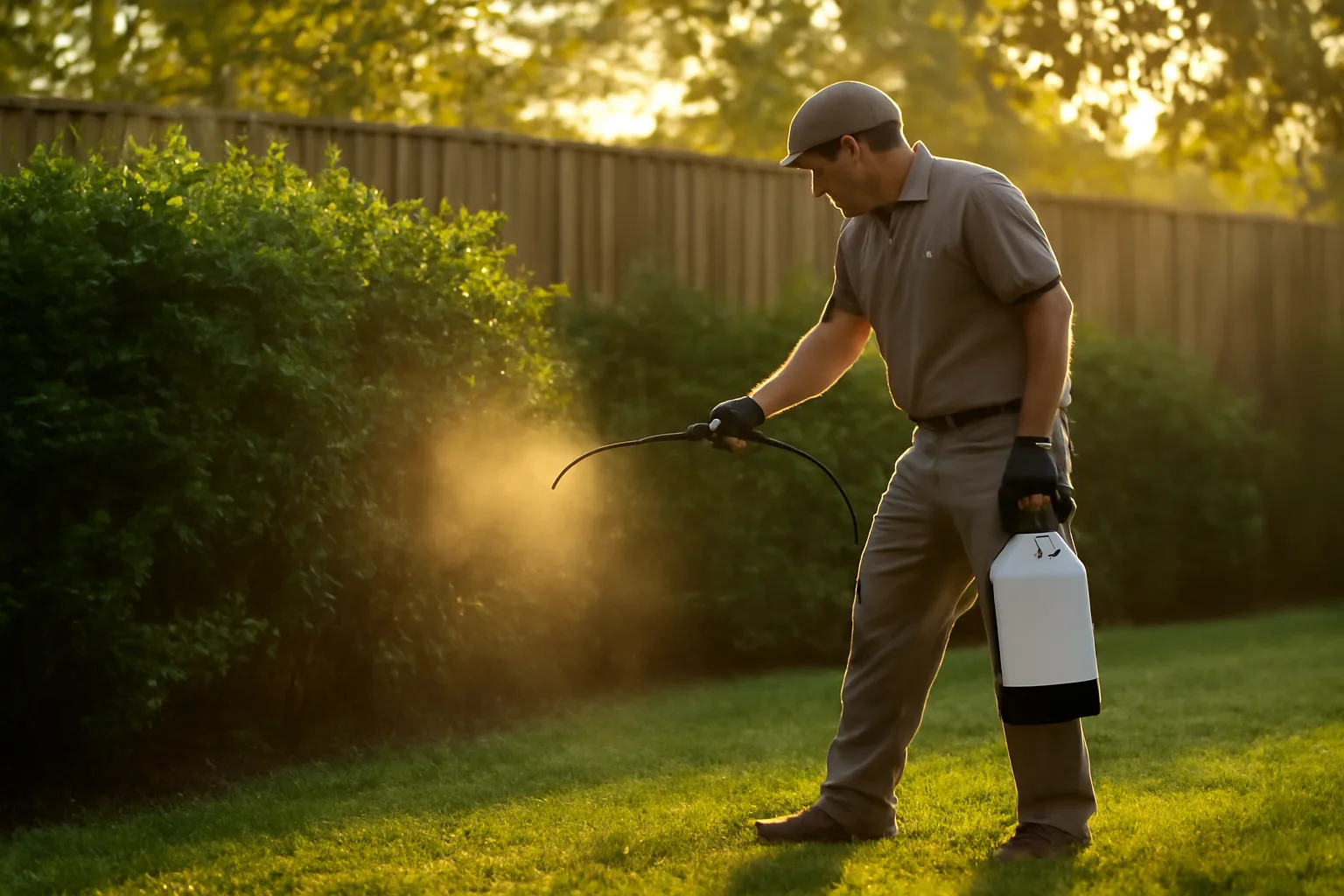
No single mosquito killer wipes out a population. The combination that works best is source reduction (dumping standing water), a barrier spray on a 10-14 day cycle during peak season, and repellent on your skin when you're outside. CO2 traps and bug zappers help less than people think; zappers mostly kill non-biting insects.
What actually kills mosquitoes, and what just repels them?
Two different jobs get lumped together under "mosquito killer," and mixing them up wastes money. Killers reduce the population: barrier sprays, larvicides in standing water, foggers, and yes, swatting them. Repellents don't kill anything; they just make you less detectable or less appetizing for the twenty minutes you're outside. Most homeowners actually want both. You want fewer mosquitoes around the patio in general, and you want to not get bitten during the barbecue tonight. A backyard barrier treatment (a residual insecticide sprayed on vegetation, fence lines, and shaded resting spots) handles the first job. Skin or clothing repellent handles the second. Neither replaces the other. CDC guidance on controlling mosquitoes at home describes source reduction, meaning eliminating standing water where mosquitoes breed, as a core step because even a small amount of stagnant water can produce a new generation of mosquitoes in about a week to ten days [1]. Skip that step and any killer you apply is fighting a losing battle against your own gutters. Worth saying plainly: nothing on the market, professional or DIY, eliminates mosquitoes from a yard. Populations get knocked down, sometimes by 80-90% for a week or two after a good barrier application, then rebound as adults fly back in from untreated areas nearby. If a product or company promises total eradication, that's marketing, not entomology.
How do you get rid of mosquitoes for good?
You don't, permanently, but you can keep numbers low enough that your yard is usable again. The realistic goal is suppression, not elimination, and it takes a few tactics stacked together rather than one product. Start with water. Walk your property after it rains and dump anything holding water for more than 3-4 days: saucers under pots, clogged gutters, tarps, kiddie pools, old tires. The Asian tiger mosquito (Aedes albopictus) and the yellow fever mosquito (Aedes aegypti), two of the most common backyard biters in the US, both breed in containers as small as a bottle cap [2]. Next, treat what you can't drain. Mosquito dunks containing Bacillus thuringiensis israelensis (Bti) are biological larvicides registered with EPA that kill mosquito larvae in birdbaths, rain barrels, and ornamental ponds without harming birds, pets, or fish when used per the label [3]. They're cheap, they work for about 30 days, and honestly there's no good reason to skip this step if you have any standing water you can't eliminate. Then layer in adult control. That's either a DIY backyard spray (more on cost and effort below), a subscription barrier service, or a misting system. For most yards with real mosquito pressure, a professional mosquito control plan applied every 10 to 14 days through the season keeps adult populations down far more consistently than a one-time spray from a hardware store bottle, because residual insecticides break down with UV exposure, rain, and mowing. Last, protect your skin when you're outside during peak biting hours (usually dawn and dusk for most species). Repellent isn't a population killer, but it's the difference between an evening on the porch and going back inside after ten minutes.
How do you keep mosquitoes away from your yard and patio?
| DIY backyard spray (store-bought) | Kills adults on contact, short residual | Low per application, reapply often | High (you do it every 1-3 weeks) | |
|---|---|---|---|---|
| Professional barrier treatment | Residual kill + knockdown on 10-14 day cycle | Recurring seasonal service fee | Low (scheduled visits) | |
| Installed misting system | Automated timed release around perimeter | Higher upfront install cost | Low after install, but chemical refills needed | None of these numbers are fixed; costs vary heavily by yard size, region, and provider, which is a big part of why a free on-site assessment matters more than a quoted "starting at" price you see online. |
Keeping mosquitoes away long-term is really about denying them the two things they need: water to breed and shade to rest during the day. A patio that's mowed, drained, and lightly treated will have noticeably fewer mosquitoes than one with tall grass and a leaky hose bib. Mosquitoes rest in cool, humid vegetation during the heat of the day, typically the underside of leaves, dense shrubs, and tall grass. That's exactly where a barrier spray targets. Products applied to these resting sites, usually a synthetic pyrethroid like bifenthrin or permethrin, kill mosquitoes on contact and leave a residue that keeps working for one to two weeks depending on weather [4]. Fans help more than people expect. Mosquitoes are weak fliers, and a box fan or ceiling fan on a patio can reduce landings meaningfully just by disrupting their flight path and dispersing the CO2 plume that draws them to you. Timing matters too. If you're only outside at dusk, focus effort there. If mosquitoes are bad all day, you likely have a nearby breeding source (a neighbor's unmaintained pool, a drainage ditch, a low spot that holds water) that's worth investigating, sometimes with your local mosquito control district or health department, since some Aedes species bite aggressively during daylight [2]. For season-long yard use, most homeowners land on one of three approaches. A quick side-by-side: | Method | What it does | Typical cost pattern | Effort |
What plants repel mosquitoes, and does it actually work?
A mosquito repellent plant is one that produces natural compounds mosquitoes find unpleasant, usually released when the leaves are crushed or brushed against, more than by sitting in a pot. That last part matters: an intact plant on your patio is not doing much repelling on its own. Commonly cited plants include citronella grass, lemongrass, lavender, marigold, catnip, basil, and rosemary. Some lab research backs up the underlying chemistry. Laboratory testing on catnip (Nepeta cataria) oil, including work summarized by Iowa State University's entomology extension program, has found the extracted oil repels mosquitoes effectively under controlled conditions, in some comparisons performing on par with or better than DEET at certain concentrations [5]. That's promising chemistry, but it's a lab result on extracted oil, not proof that a catnip plant in a pot protects your ankles at a barbecue. The honest take: potted mosquito repellent plants make a nice-smelling patio and can offer a marginal, localized effect, especially if you crush leaves and rub the oils on skin or clothing (not usually recommended without a formulated, tested product). They are not a substitute for EPA-registered repellents or a yard treatment plan. If you like gardening and want to stack small advantages, plant them. If you're relying on a lavender pot to solve a real mosquito problem, you'll be disappointed by July. For readers who want the deeper list and planting guidance, see our plants that repel mosquitoes breakdown.
How do you get rid of mosquitoes in the house?
Indoor mosquitoes almost always mean one of two things: they're getting in through a gap (door sweep, torn screen, chimney), or they're breeding inside, most often in a forgotten container of standing water like a plant saucer, a clogged floor drain, or even a vase. Start with the entry points. Check screens for tears, make sure exterior doors seal tightly, and look at where pipes or cables enter the house; these gaps are common overlooked entry routes. Indoors, an aerosol labeled for flying insects (check the EPA registration number on the label and follow instructions on ventilation and reentry) will handle mosquitoes already inside, but it won't stop new ones from coming in. Plug-in devices using synthetic pyrethroids, and yes, a basic flyswatter, work fine for occasional strays. If mosquitoes keep appearing indoors day after day despite sealed entry points, check every houseplant saucer and any indoor water feature; even a half-inch of standing water is enough for Culex or Aedes species to complete a breeding cycle in about a week to ten days depending on temperature [1]. A well-maintained window screen with no holes is genuinely one of the best mosquito killers you'll never think of as one, because it prevents the whole problem rather than treating it after the fact.
How do you get rid of mosquitoes in the backyard specifically?
Backyard mosquito control is really a checklist, and skipping steps is the number one reason people feel like nothing works. Here's the order that actually moves the needle: 1. Eliminate or treat standing water within a two-block radius mentally, since adult mosquitoes typically don't fly far from where they emerged, often just a few hundred yards for many species, though some can travel farther. 2. Mow tall grass and thin dense shrubs where mosquitoes rest during the day. 3. Apply or schedule a barrier treatment to vegetation, fences, and shaded structures. 4. Add Bti dunks to any water feature you can't drain. 5. Use fans on the patio during use. 6. Apply skin repellent for the specific evening you're outside. Steps 1, 2, and 4 you do yourself, ongoing, for basically no cost beyond a bag of dunks. Step 3 is where DIY sprays and professional service diverge most, because a one-time hardware store treatment loses effectiveness within one to two weeks as it weathers off vegetation, while a scheduled 10-14 day barrier cycle keeps residual coverage active through the season without gaps. This is the point where a free yard assessment earns its keep: a technician walking your actual property finds the shaded resting sites, drainage patterns, and water sources that a generic checklist can't, and prices a seasonal plan around your yard's specific pressure rather than a flat national average.
How do you get rid of ticks in your yard?
Ticks and mosquitoes get treated as a matched pair by pest control marketing, but they behave differently, and yard control for ticks leans harder on landscaping than spraying alone. Ticks don't fly or jump; they quest, meaning they climb to the tip of grass or leaf litter and wait for a host to brush past. That means the highest-risk zones in a yard are the edges: where lawn meets woods, tall grass, leaf piles, and stone walls where mice and other small mammal hosts travel. The CDC's tick prevention guidance recommends creating a mowed, dry barrier at least 3 feet wide between wooded areas and lawns or patios, since ticks and the rodents that carry them cross far less readily over cleared, sunny ground [6]. Keeping grass mowed short and clearing leaf litter and brush from around the yard edge is listed among the CDC's core landscaping recommendations for reducing tick populations near the home [6]. For active treatment, licensed applicators use products labeled for ticks, often the same barrier chemistries used for mosquitoes but applied specifically to the yard perimeter, stone walls, and leaf litter zones rather than open lawn, since that's where ticks actually live. A tick repellent applied to skin and clothing (look for permethrin-treated clothing or an EPA-registered skin repellent) remains your best personal protection even after yard treatment, because a single tick wandering in from a neighbor's property or a wooded trail doesn't care about your barrier spray schedule. Deer are a major long-distance carrier for adult ticks in many regions; fencing that excludes deer from the immediate yard can meaningfully cut tick load over a season, though it's a bigger project than most homeowners take on for this reason alone.
What's the difference between a bug zapper, a CO2 trap, and a barrier spray?
These three get compared constantly and they're not really competing products; they solve different problems, and one of them barely works for mosquitoes at all. Bug zappers (the purple-light electric grid kind) are, frankly, mostly theater against mosquitoes. University extension entomology programs have long pointed to field research showing that the vast majority of insects killed by UV light zappers are non-biting insects, moths, beetles, and other insects drawn to light, not mosquitoes, which are drawn primarily to CO2 and body heat rather than light . If your goal is fewer mosquito bites, a zapper is close to a waste of money; it's satisfying to hear the zap, but it's not doing the job. CO2 traps (propane or electric units that mimic human breath by emitting carbon dioxide, heat, and sometimes octenol) work on a completely different principle and do catch mosquitoes, sometimes in real numbers over weeks of continuous operation. They're a legitimate population-reduction tool for a yard, but they require running continuously, replacing propane or attractant regularly, and they work best alongside source reduction rather than instead of it. They also can, in some cases, draw more mosquitoes into your yard from surrounding areas before those mosquitoes get trapped, which is a real tradeoff worth knowing about. Barrier sprays are the workhorse for most homeowners because they kill mosquitoes already resting in your yard's vegetation and leave a residual effect that keeps working between applications. They don't attract mosquitoes in from elsewhere the way a trap can. For a yard with real biting pressure, a scheduled barrier program does more per dollar than a zapper and is lower-maintenance than a CO2 trap.
When do mosquitoes go away for the season?
Mosquitoes typically become inactive once consistent nighttime temperatures drop into the 50s Fahrenheit, and most species stop biting entirely below around 50°F, though this varies by species and region, and there's genuine year-to-year variability even within the same area. In much of the northern and midwestern US, that means late September through October for a hard drop-off, while the Gulf Coast, Florida, and parts of the Southwest can see mosquito activity persist nearly year-round during mild winters. Many mosquito species don't actually die when it gets cold; females of species like Culex overwinter as adults in sheltered spots (culverts, crawl spaces, hollow logs), then re-emerge once spring temperatures return, which is why an unusually warm early spring can mean mosquitoes show up weeks ahead of a typical year. Because the cutoff is temperature-driven rather than calendar-driven, the honest answer to "when do mosquitoes go away" is: check your local extension service or health department's mosquito surveillance data rather than relying on a fixed date, since a warm fall in Ohio can run weeks longer than a cool one in the same state the year before. This regional variability is also why seasonal treatment plans get timed to actual conditions rather than a fixed start and stop date; a barrier program that begins too early wastes applications, and one that stops too early leaves a warm September unprotected.
Is a professional barrier treatment or a misting system the better mosquito killer?
Both apply an EPA-registered insecticide to your yard, per label instructions, but they differ in how and how often, and the right choice depends mostly on yard size and how much control you want over the chemical exposure. A barrier treatment is a technician-applied spray, typically to shrubs, tree lines, fence rows, and other resting sites, done on a recurring schedule, commonly every 10 to 14 days during peak season for programs designed around that residual breakdown window. You get a fresh application, a visible knockdown in population within a day or two, and then a slow decline in effectiveness until the next visit. A misting system is a fixed installation, usually tubing run along the yard perimeter with nozzles that release a fine mist on a timer, often at dawn and dusk when mosquitoes are most active. It requires no one to show up each cycle, but it does mean insecticide is dispersed automatically on a timer regardless of whether mosquitoes are actually active that day, which is part of why some extension entomologists and pest management professionals raise resistance and non-target insect concerns about scheduled misting versus targeted barrier applications. Neither is inherently "safer" or "more dangerous" in a blanket sense; both use EPA-registered products that carry label instructions on application rates, reentry intervals, and precautions around pollinators, pets, and children, and following that label is what determines safe use, not the delivery method itself [3]. For most single-family yards, a scheduled barrier visit gives more control and lower standing chemical load than an automated mister; for larger properties or households that want zero scheduling involvement, an installed system can make more sense. A free yard assessment is the fastest way to get an honest recommendation for your specific property rather than guessing between the two.
What does a mosquito barrier treatment actually involve?
A typical visit starts with the technician walking the property to identify resting sites (shaded shrubs, tall grass, fence lines, the underside of deck structures) and any standing water sources, since a good technician treats the yard, more than the lawn. The spray itself, usually a synthetic pyrethroid like bifenthrin or a similar EPA-registered active ingredient, gets applied to vegetation and structures where mosquitoes rest, not broadcast across open lawn or flower beds where pollinators feed, which limits non-target exposure while still hitting where mosquitoes actually spend the day. Homeowners are typically advised to stay off treated areas until the product dries, generally a few hours, per the product label. Most seasonal programs run through the local mosquito season (see the timing section above) with visits repeating every 10 to 14 days, since that interval roughly matches how long residual effectiveness holds up against sun, rain, and regular mowing before a fresh application is worth doing again. One visit will not solve a mosquito problem; that's not a sales pitch, it's just how residual insecticides work. A single application knocks down the current population and keeps killing for a couple of weeks, but eggs already in the environment keep hatching, and adults fly in from neighboring untreated yards. That's the whole logic behind a recurring cycle instead of a one-time spray, and it's worth asking any provider you're evaluating exactly what interval they use and why.
Frequently asked questions
How do I get rid of mosquitoes fast, like today?
For same-day relief, run fans on your patio, apply an EPA-registered skin repellent (DEET, picaridin, or oil of lemon eucalyptus), and light citronella candles as a minor supplement, not a primary defense. For actual population reduction that lasts, you need standing water removed and a barrier spray, which take longer to show full effect.
How do I keep mosquitoes away without spraying chemicals?
Eliminate standing water, mow tall grass, use fans outdoors, and add screens to windows and doors. These steps meaningfully reduce mosquito presence without any insecticide, though they won't fully replace a barrier treatment if your yard has heavy pressure from nearby breeding sites you can't control.
How do you get rid of ticks in general, more than in the yard?
Check yourself and pets after being outdoors, shower within two hours of coming inside, treat clothing with permethrin, and keep yards mowed with a clear buffer between lawn and wooded edges per CDC guidance. Removing attached ticks promptly with fine-tipped tweezers reduces disease transmission risk significantly.
What is a mosquito repellent plant exactly?
It's a plant that produces natural compounds mosquitoes tend to avoid, usually released when leaves are crushed or bruised rather than just by growing nearby. Citronella grass, catnip, lavender, and lemongrass are common examples, though the repelling effect from an intact potted plant is modest compared to formulated repellents.
What plants repel mosquitoes the best?
Catnip oil has shown strong repellency in laboratory testing, in some tests comparable to DEET. Citronella, lemongrass, lavender, marigold, and rosemary are also commonly cited, but planting them alone won't replace a yard treatment plan for a real mosquito problem.
How do I get rid of mosquitoes in my house quickly?
Check window screens for tears, seal gaps around doors and pipes, and dump any indoor standing water (plant saucers, vases, unused humidifiers). An aerosol labeled for flying insects handles mosquitoes already inside; a well-sealed home stops new ones from getting in.
How do I get rid of mosquitoes in the house if they keep coming back?
Recurring indoor mosquitoes almost always mean an entry point or an indoor breeding source you haven't found yet. Check every plant saucer, floor drain, and any water feature; even a half-inch of standing water lets Culex or Aedes mosquitoes complete a breeding cycle in about a week.
When do mosquitoes go away for the year?
Most species stop biting once nighttime temperatures consistently drop below roughly 50°F, typically late September into October in northern and midwestern states, later or not at all in warmer Southern regions. Many species survive winter as dormant adults and re-emerge in spring, so timing varies by location and year.
How do I get rid of mosquitoes in my backyard permanently?
Permanently isn't realistic; suppression is. Remove standing water, mow regularly, add Bti dunks to water features you can't drain, and get a scheduled barrier treatment on a 10-14 day cycle through your local mosquito season. Combined, these steps keep populations low enough to actually use your yard.
How do you get rid of ticks from your yard without killing everything else?
Focus treatment on yard edges, leaf litter, and stone walls rather than open lawn, since that's where ticks actually quest for hosts. Mowing short, clearing brush, and creating a 3-foot dry barrier between lawn and woods, per CDC recommendations, reduces tick habitat with no chemical involved at all.
Do bug zappers actually kill mosquitoes?
Not effectively. Field research cited by university entomology extension programs has found the majority of insects killed by UV bug zappers are non-biting insects like moths and beetles, not mosquitoes, which are drawn to CO2 and body heat rather than light.
Is DEET or picaridin better for a mosquito killer routine?
Both are effective EPA-registered skin repellents when applied per label directions; DEET has the longest track record, while picaridin is odorless and less likely to damage plastics or fabrics. Neither kills mosquito populations; they only reduce your chance of being bitten while applied.
How often should a professional mosquito treatment be applied?
Most seasonal barrier programs run on a 10-14 day cycle during peak mosquito months, matching how long the residual insecticide stays effective against sun, rain, and mowing. Shorter intervals waste money; longer gaps leave real coverage lapses between visits.
Sources
- CDC, Controlling Mosquitoes at Home: Source reduction (eliminating standing water) is a core step of mosquito control; even small amounts of stagnant water can produce mosquitoes within about a week to ten days
- CDC, Aedes aegypti and Aedes albopictus: Aedes aegypti and Aedes albopictus breed in small containers and some species bite during daylight hours
- EPA, Bacillus thuringiensis subsp. israelensis (Bti) fact sheet, EPA 730-F-05-XXX (biopesticide registration): Bti is a biological larvicide registered with EPA used to kill mosquito larvae in standing water per label instructions
- EPA, Using Insect Repellents Safely and Effectively: EPA-registered repellents and insecticides carry label instructions governing safe and effective use
- CDC, Preventing Tick Bites on People: CDC recommends a mowed, dry barrier of at least 3 feet between lawns/patios and wooded areas to reduce tick populations
- Purdue University Extension Entomology, publication E-11, "Bug Zappers": Electric bug zappers kill mostly non-target insects rather than mosquitoes, which are drawn to CO2 and heat, not UV light