Last updated 2026-08-14
TL;DR
Dump standing water weekly, treat tall grass and shade with an EPA-registered barrier spray every 10 to 14 days during the season, and add larvicide dunks to anything holding water you can't drain. No single step gets rid of mosquitoes completely, but combining source reduction with repeat barrier treatments cuts backyard populations hard within a week or two.
How do I get rid of mosquitoes in my backyard for good?
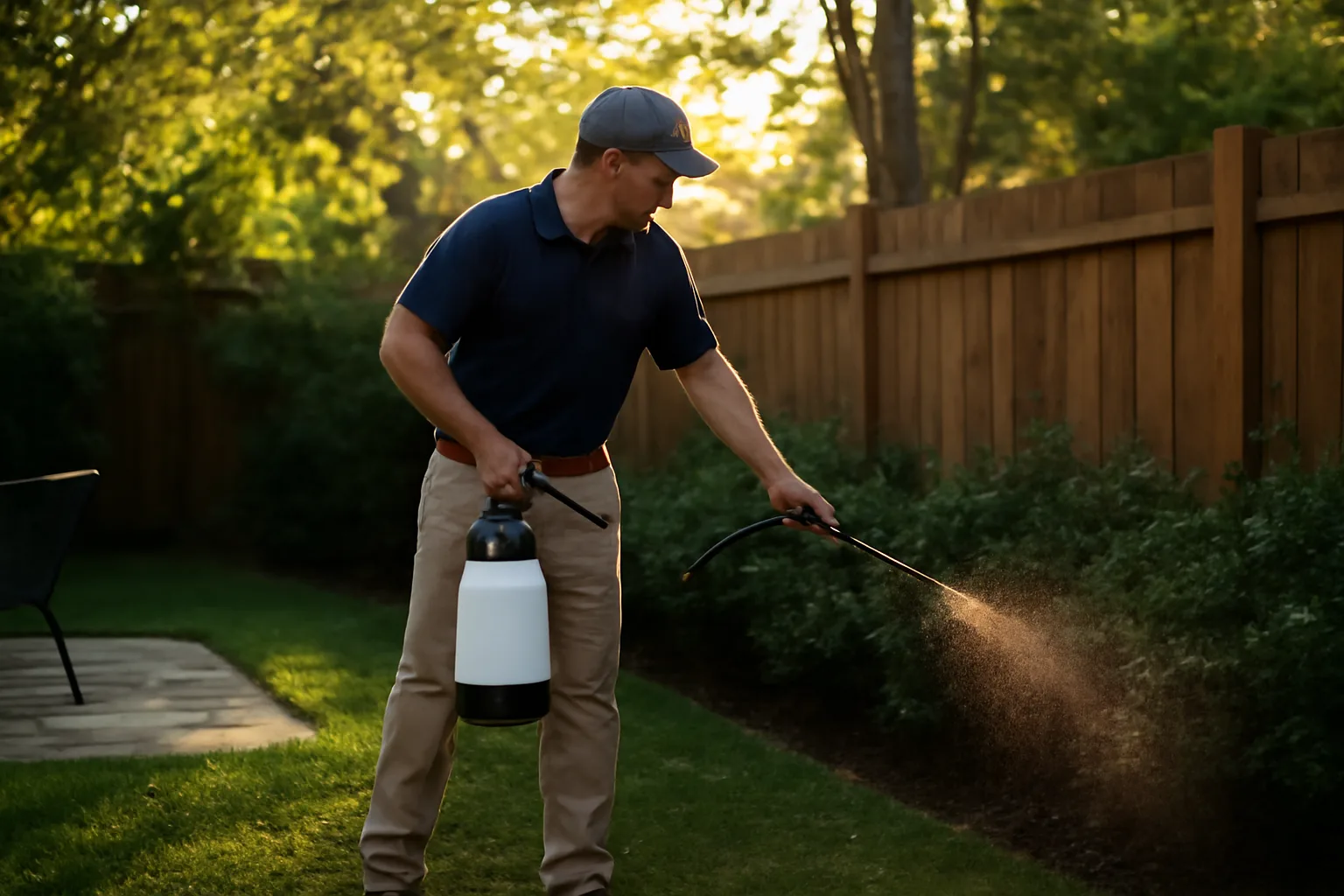
There's no "for good." Mosquitoes fly in from neighboring yards, storm drains, and wetlands, so any yard near water or shade will always have new arrivals. What you're actually doing is suppression: knocking the population down and keeping it down, week after week, through the season. The combination that works, according to every mosquito-borne disease program I've seen, is source reduction plus repeat treatment. The CDC's guidance on mosquito control for homeowners puts it plainly: "Once a week, empty and scrub, turn over, cover, or throw out any items that hold water" [1]. That single habit removes the breeding sites in your own yard. Adult mosquitoes still fly in, though, which is where barrier sprays or a misting system come in. A realistic plan looks like this: dump or treat standing water weekly, spray a residual barrier treatment on vegetation and shaded resting spots every 10 to 14 days during mosquito season, and keep grass cut short since female mosquitoes rest in tall grass and dense shrubs during the heat of the day. Do all three and most homeowners notice a real drop in bites within the first week or two. Skip the water removal and spray alone, and you're fighting a losing battle because a single forgotten bucket can produce hundreds of new mosquitoes every week.
How do I keep mosquitoes away from my yard long term?
Long-term control means treating your yard on a schedule, more than when you notice bites. Mosquito populations rebound fast, usually within 2 to 3 weeks of a single treatment, because barrier sprays are residual, not permanent, and new adults keep emerging from eggs laid before treatment. Most professional programs, including barrier treatment services, run on a 10 to 14 day cycle through the warm months. That interval matches the residual life of common pyrethroid-based backyard treatments and also lines up with the roughly week-long window it takes mosquito eggs to develop into biting adults in warm weather [2]. Treating any less often and you're letting a full generation slip through between visits. Beyond spraying, a few habits keep pressure down between treatments: - Check gutters twice a season; clogged gutters that hold water are one of the most overlooked breeding sites around a house.
- Aerate or add movement to ponds and water features. Mosquito larvae need still water; even a small fountain pump can disrupt breeding.
- Keep bird baths fresh, changing the water every 3 to 4 days, faster than the roughly week-long larval development cycle.
- Store tires, buckets, and kiddie pools upside down or under cover.
- Trim back overgrown brush along fence lines, since adult mosquitoes rest in shaded, humid vegetation during the day. A quote-based service will usually build this into a seasonal plan: a free yard walk to map wet spots and resting sites, then treatments on that 10 to 14 day cycle for as long as mosquitoes are active in your area.
What actually gets rid of standing water mosquitoes breed in?
Standing water is the single biggest lever you control. Female mosquitoes lay eggs directly on or near standing water, and most common backyard species (Aedes and Culex) can complete egg-to-adult development in as little as 7 to 10 days in warm weather [2]. Walk your property and look for anything that holds water for more than a few days: clogged gutters, tarps with a low spot, plant saucers, old tires, unused kiddie pools, tree holes, corrugated drainage pipe ends, and even bottle caps. The EPA notes that mosquitoes "need only a small amount of water" to breed, sometimes as little as a bottle cap's worth [3]. For water you can't dump (ornamental ponds, rain barrels, low spots that stay wet after rain), use a larvicide containing Bti (Bacillus thuringiensis israelensis). Bti is a naturally occurring bacterium that targets mosquito larvae specifically and is considered low-risk to fish, pets, and beneficial insects when used according to the label; it's sold as "mosquito dunks" at most hardware stores. The EPA has registered Bti products for use in these situations since the 1980s [4]. Drop a dunk in a rain barrel or low drainage area and it typically keeps working for about 30 days. For water you can dump, dump it weekly. That's the CDC's actual stated interval, not a rough guess: emptying containers "once a week" breaks the breeding cycle before eggs can mature [1].
How do I get rid of ticks in my yard?
Tick control starts with the same idea as mosquito control: shrink the habitat before you spray. Ticks don't fly in like mosquitoes; they climb onto hosts (deer, rodents, pets, you) from grass and leaf litter, so the goal is to make your yard inhospitable to them. The CDC and university extension programs recommend a layout strategy: keep a mowed strip, ideally about 3 feet wide, between wooded areas and your lawn or play spaces. Ticks dry out quickly in sun and short grass, so this buffer cuts down how many make it into the yard you actually use [5]. Clear leaf litter, stack woodpiles neatly and in dry, sunny spots, and keep grass mowed short. Barrier sprays labeled for ticks (often the same pyrethroid or bifenthrin-based products used for mosquitoes) work best applied to the yard perimeter, leaf litter edges, stone walls, and shaded brush lines where ticks quest for hosts, rather than the open lawn where ticks rarely are. A study from the CDC on landscaping and tick exposure found that yard management practices like these are associated with meaningfully lower tick populations near homes [5]. If you have deer traffic, consider a repellent product or fencing, since deer are a major host for adult blacklegged ticks (the species that carries Lyme disease). Treating pets with a vet-approved tick preventive matters too. A yard treatment reduces questing ticks in the environment, but it won't stop a tick riding in on an untreated dog. For a broader look at products, see tick repellent options that pair with yard treatment.
How do you get rid of ticks from your yard specifically (more than prevent them)?
If ticks are already established, active reduction takes a combination of habitat change and targeted spraying, more than prevention going forward. Start with a perimeter treatment. Because ticks concentrate at the wood-lawn edge, in leaf litter, along stone walls, and in tall grass rather than spreading evenly across a lawn, a targeted barrier application to those specific zones is far more efficient than blanket-spraying the whole yard. Products containing bifenthrin or permethrin, applied per the EPA label, are common choices for this kind of edge treatment. Remove leaf litter under trees and along fence lines; this is prime tick habitat and also where their rodent hosts (mice, chipmunks) nest. Discourage rodents further by securing trash, stacking wood off the ground, and cutting down brush piles. Retreatment matters. Tick populations, like mosquitoes, rebound after a residual spray wears off, and nymph and adult ticks are active across different parts of the year depending on region and species, so a single spring treatment usually isn't enough. Check with your local extension office or health department for the tick species and seasonal activity pattern specific to your area, since blacklegged tick, lone star tick, and American dog tick ranges and peak seasons vary quite a bit across the U.S. [6].
What plants repel mosquitoes, and do mosquito repellent plants actually work?
A mosquito repellent plant is a plant that contains natural compounds mosquitoes find irritating or that mask the scent cues mosquitoes use to find hosts. Citronella, lemongrass, lavender, marigold, catnip, and rosemary are the usual list you'll see recommended. Here's the honest answer: these plants contain real repellent compounds, but planting them in the ground does very little on its own. The compounds have to be released in concentration, usually by crushing the leaves or extracting the oil, to have a measurable effect. A live citronella plant sitting in a pot doesn't release enough oil into the air to create a protective zone around your patio. This lines up with how EPA-registered plant-based repellents work: products containing oil of lemon eucalyptus (OLE) are registered as effective when applied directly to skin at the right concentration, not when the plant is simply growing nearby . So plant them if you like the look, the pollinators, or the idea of crushing a few leaves and rubbing them on for a short-term, weak effect. Don't expect a lavender border to replace a barrier treatment. If you want a plant-based approach to layer on top of a real program, our natural mosquito repellent guide covers which oils have actual EPA-registered backing versus which are folklore.
How do I get rid of mosquitoes in my house?
Indoor mosquitoes usually mean one of two things: they're flying in through gaps (doors, window screens, vents) or they're breeding in water inside the house (a forgotten vase, a drain pan under a plant, a humidifier reservoir). Start with entry points. Check window and door screens for tears, and make sure screens are tight against frames. Mosquitoes are small enough to squeeze through gaps you'd barely notice. Check standing water indoors the same way you would outside. Drain pans under refrigerators and AC units, vases, pet water bowls left out too long, and unused humidifiers can all hold enough water for a mosquito to lay eggs, especially with the 7 to 10 day development window mentioned earlier [2]. For active adults already inside, a few approaches work in combination: an indoor-labeled aerosol or plug-in repellent for spot treatment, a fan (mosquitoes are weak fliers and struggle against moving air, which is why porch fans work so well outdoors too), and simply reducing light and CO2 cues near doors at dusk when mosquitoes are most active. Traps using UV light or CO2 lures can help in a screened porch or garage but rarely clear a whole house on their own. If mosquitoes keep getting in despite sealed screens, look outside first: a heavy population pressing against your house means the yard problem needs solving, more than the house. That's the same logic behind mosquito control programs that treat the yard as the actual source, rather than chasing mosquitoes room by room.
How do I get rid of mosquitoes in the house long term (more than the ones already inside)?
Killing the mosquitoes already indoors is a one-time fix. Stopping new ones from getting in is the actual long-term project, and it depends heavily on outdoor population pressure. Seal gaps around utility lines, dryer vents, and window AC units, since these are common overlooked entry points beyond doors and window screens. Add or repair door sweeps; a quarter-inch gap under a door is enough for mosquitoes to walk or fly through at dusk when they're most active. Consider a screened porch or patio enclosure if you spend a lot of time with doors open in the evening. Every time a door opens near dusk during peak activity hours, you're inviting mosquitoes in, and no amount of indoor spraying beats a physical barrier at the doorway. The bigger lever, though, is outdoor population pressure. A yard with 10 breeding sites and no barrier treatment is going to keep pushing mosquitoes toward your doors and windows no matter how well you seal them. This is really the case for treating the outdoor side as the primary fix; indoor measures are damage control.
When do mosquitoes go away for the season?
Mosquitoes go dormant or die off once temperatures drop consistently below about 50°F (10°C), since most species become inactive at that threshold and adult activity effectively stops in most of the continental U.S . Exact timing varies hard by region and by year's weather pattern, so treat any date here as typical, not fixed. In much of the northern U.S. and upper Midwest, that usually means late September through October. In the Gulf Coast, Florida, and parts of the Southwest, mosquitoes can stay active nearly year-round in mild winters, with only brief lulls during cold snaps. Many mosquito species survive winter as eggs (laid in a spot that will flood in spring) or as overwintering adults tucked into protected spaces like culverts, tree holes, or crawl spaces, ready to resume activity once temperatures climb back above that 50°F line in spring . Because of that range, the smart move is checking with your local mosquito control district, university extension service, or health department for typical first-frost and last-frost dates in your specific county, rather than relying on a national average. A seasonal barrier plan should track that local window, starting treatments a few weeks before mosquitoes typically become active in spring and continuing until the first hard frost reliably ends the season.
What's the difference between barrier sprays and misting systems for backyard control?
Both approaches use EPA-registered insecticides applied per label instructions, but they differ in how and how often they're applied, and that changes the cost and maintenance picture quite a bit. | Feature | Barrier spray treatment | Installed misting system | |---|---|---| | Application method | Technician sprays vegetation, shade, and resting spots | Fixed nozzles around the property mist automatically | | Typical frequency | Every 10-14 days during season | Multiple short mistings per day, automated | | Upfront cost | Low; pay per visit or per season plan | Higher; involves installation of tubing and a reservoir/pump | | Best for | Most residential yards, seasonal use | Larger properties, frequent outdoor entertaining, chronic pressure | | Ongoing upkeep | None between visits | Refill reservoir, maintain nozzles/tubing | For most homeowners, a barrier treatment on a 10 to 14 day cycle covers the need without the upfront installation cost. Misting systems make more sense for larger properties, waterfront lots with heavy pressure, or households that entertain outdoors constantly and want near-continuous suppression rather than a residual that fades between visits. Either way, a free yard assessment is the right starting point before committing to either, since the right call depends on your lot size, water features, and how much mosquito pressure you're actually dealing with. If you're the type who wants to see both options laid out side by side before deciding, Get a free yard assessment and a technician can walk the property with you.
Do backyard mosquito treatments actually eliminate mosquitoes?
No, and any service that promises full elimination isn't being straight with you. Barrier treatments and misting systems knock resting and flying adult mosquitoes down substantially, often within days of application, but they do not create a mosquito-free bubble, especially near woods, wetlands, or a neighbor's untreated yard. Mosquitoes are highly mobile; adults can travel anywhere from a few hundred feet to over a mile depending on species and wind conditions, so a treated yard next to an untreated marsh will always see some pressure. What a well-run barrier program does is reduce the population enough that you can actually use your yard at dusk without getting eaten, and reduce breeding by hitting resting sites before females get a blood meal and lay eggs. Realistic expectations: most homeowners see a sharp drop in bites within the first week of a barrier program, with populations staying suppressed as long as the 10 to 14 day treatment cycle holds and standing water sources stay under control. That's a very different, and more honest, promise than "gets rid of mosquitoes."
Frequently asked questions
How do I get rid of mosquitoes in my backyard fast?
For the fastest visible drop, combine a same-day barrier spray treatment (professional or a labeled homeowner product applied to shaded vegetation and resting spots) with immediately dumping any standing water within about 100 feet of your patio. You'll usually see fewer bites within a day or two, though the real population drop builds over the first week as breeding sites dry up.
How often should I spray my yard for mosquitoes?
Most barrier treatments hold up for about 10 to 14 days before residual effectiveness fades and populations start to rebound. That's the standard cycle used by seasonal mosquito control programs during active months. Spraying less often lets a full mosquito generation (roughly 7 to 10 days egg to adult) slip through untreated.
What smells keep mosquitoes away?
Citronella, lemongrass, clove, and oil of lemon eucalyptus (OLE) are the scents with real backing, since OLE is registered by the EPA as an effective skin repellent ingredient. Candles and diffusers with these scents can help in a small, still area like a patio table, but they don't replace a yard-wide barrier treatment for real coverage.
How do I get rid of ticks in my yard naturally?
Mow grass short, clear leaf litter, and create a 3-foot mulch or gravel buffer between lawn and wooded edges, since ticks dry out and avoid open, sunny, short-grass areas. Keep woodpiles dry and off the ground to discourage rodent hosts. These habitat changes reduce tick numbers without any spraying, though they work best combined with a targeted perimeter treatment.
What plants repel mosquitoes?
Citronella, lemongrass, lavender, marigold, catnip, and rosemary all contain compounds mosquitoes find irritating. Planting them adds a mild effect at best; the compounds need to be crushed or extracted into oil to actually repel at useful concentrations, so a growing plant alone won't clear a patio the way a barrier spray or EPA-registered repellent will.
How do I get rid of mosquitoes in my house?
Check window and door screens for gaps, drain any standing water indoors (plant saucers, drain pans, unused humidifiers), and use a fan or indoor-labeled repellent for mosquitoes already inside. If mosquitoes keep entering despite sealed screens, the source is usually outdoor pressure, meaning a yard-level treatment matters more than indoor spraying alone.
When do mosquitoes go away for the year?
Mosquito activity typically drops off once nighttime temperatures consistently fall below about 50°F, which usually means late September to October in northern states and much later, or not at all, in warm Gulf Coast and Southwest climates. Check your local extension service or mosquito control district for the typical first-frost date in your county.
Can I get rid of mosquitoes without chemicals?
You can reduce mosquitoes significantly through source reduction alone: dumping standing water weekly, using Bti dunks in water you can't drain, adding fans to outdoor sitting areas, and keeping grass short and brush trimmed. This won't eliminate mosquitoes flying in from elsewhere, but it removes your yard as a breeding source and cuts resting habitat.
How do ticks get into a yard in the first place?
Ticks arrive riding on hosts, not by flying or jumping: deer, rodents, birds, and pets carry them in from wooded or overgrown areas. Once dropped in leaf litter or tall grass, ticks quest (climb vegetation and wait) for the next passing host, which is why yard edges near woods see the heaviest tick activity.
Do mosquito misting systems work better than spray treatments?
Misting systems mist automatically multiple times a day and suit larger properties or households dealing with constant heavy pressure, while barrier sprays applied every 10 to 14 days cover most standard residential yards at lower upfront cost. Neither eliminates mosquitoes completely; the right choice depends on lot size, budget, and how much outdoor time you're protecting.
What temperature kills mosquitoes?
Most mosquito species become inactive once temperatures drop below about 50°F, and sustained freezing temperatures kill adult mosquitoes outright, though eggs of many species can survive winter and hatch once conditions warm up in spring. This is why activity resumes each year even after a hard winter.
How long does it take for a mosquito treatment to work?
Most barrier treatments start reducing visible adult mosquito activity within 24 to 48 hours of application, with the fuller population drop building over the first week as the treatment reaches resting sites and breeding cycles get disrupted. Effectiveness then holds for roughly 10 to 14 days before a repeat treatment is needed.
Sources
- CDC, Controlling Mosquitoes at Home: CDC recommends emptying and scrubbing water-holding containers once a week to prevent mosquito breeding
- CDC, Mosquito Life Cycle: Mosquito egg-to-adult development can occur in about a week under warm conditions
- CDC, Preventing Tick Bites on People: Creating a mowed buffer zone between lawns and wooded areas reduces tick populations near homes
- CDC, Regions Where Ticks Live: Tick species and seasonal activity patterns vary significantly by region across the U.S.
- EPA, Repellent Products with Oil of Lemon Eucalyptus: Oil of lemon eucalyptus (OLE) is EPA-registered as an effective skin-applied mosquito repellent ingredient
- CDC, About Mosquitoes: Mosquito activity typically drops off once temperatures fall below about 50°F, with many species overwintering as eggs or dormant adults