Last updated 2026-08-14
TL;DR
A mosquito spray company applies EPA-registered barrier treatments to vegetation every 10-21 days through the season, cutting adult mosquito populations noticeably but not eliminating them. Expect a free yard walkthrough, a per-visit or seasonal quote, and follow-up between visits: standing water removal and plantings help but don't replace the spray cycle.
What does a mosquito spray company actually do?
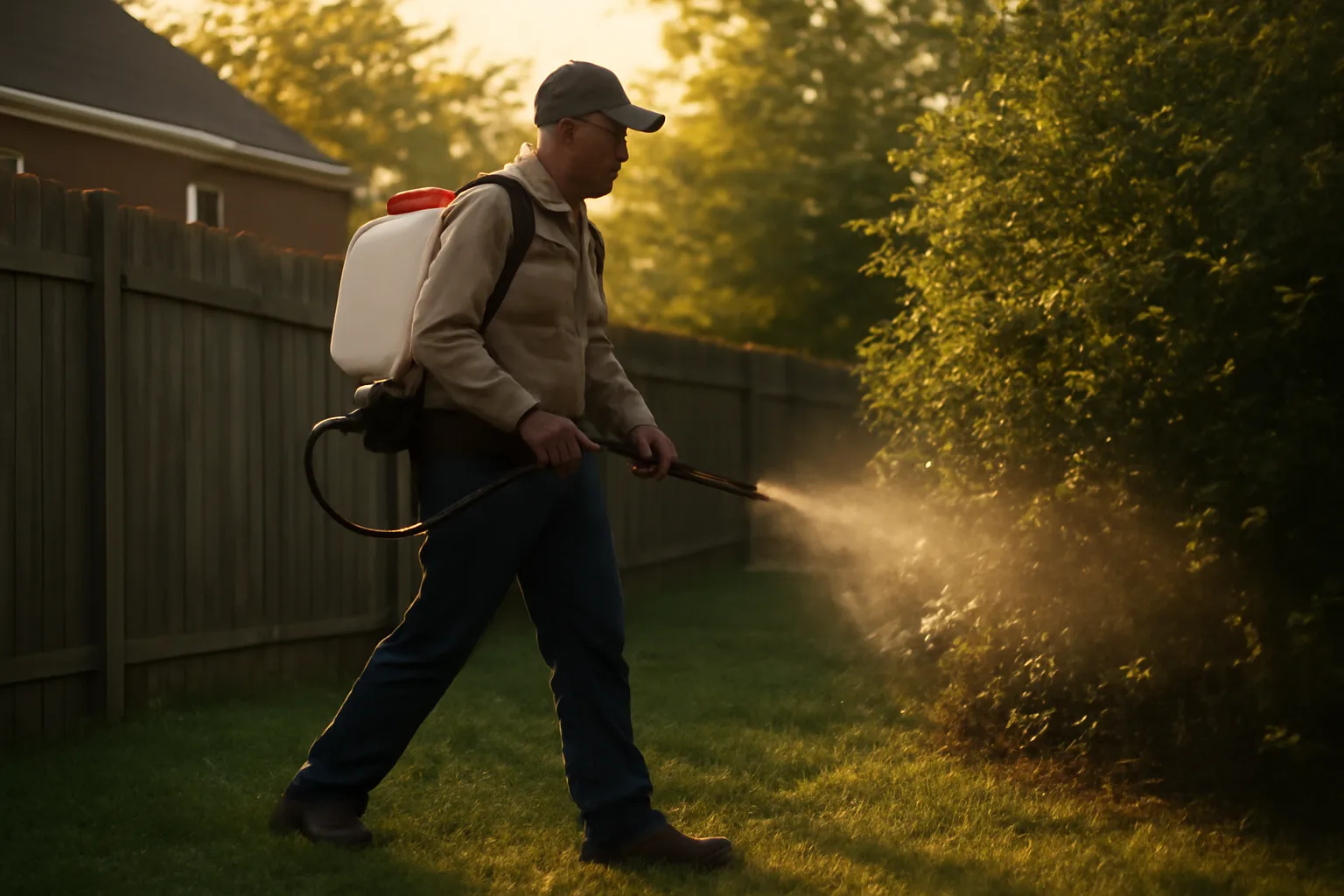
A mosquito spray company sends a technician to walk your property, identify standing water and resting sites (dense shrubs, ivy, the underside of decks, tall grass along fence lines), and apply a barrier treatment to vegetation and other surfaces where adult mosquitoes rest during the day. The product is EPA-registered and applied according to its label instructions; no company can legally claim it's "safe" or "non-toxic," only that it's registered for the intended use and applied as directed. Most residential programs run on a repeat cycle, typically every 10 to 14 days during the active season, sometimes stretched to 21 days in cooler months or shortened during heavy rain. That interval isn't arbitrary. Many pyrethroid barrier products break down under UV light and rain within roughly two to three weeks, which is why a one-time spray fades fast and why companies sell a season, not a single visit [1]. A legitimate quote should include a walk of the yard, identification of water sources you can dump yourself, and a written explanation of what's being applied and where. If a company won't tell you the active ingredient or won't do a yard walk before quoting a price, that's a red flag. You're paying for judgment about where mosquitoes breed and rest, more than for someone to point a hose at your bushes. Some companies also install misting systems: fixed nozzles plumbed around the yard's perimeter that release a fine mist on a timer or remote trigger. These cost more upfront and require refill and maintenance, but they treat automatically without a truck visit. For most quarter-acre suburban lots, a barrier spray cycle is cheaper and just as effective; misting systems tend to make more sense on larger properties, event venues, or for people who want zero on-site chemical storage decisions of their own. If you're weighing the two, our mosquito control guide breaks down the tradeoffs in more depth.
How do you get rid of mosquitoes for good?
You don't, and any company that promises total elimination is overselling. Mosquitoes fly in from neighboring properties, wetlands, and storm drains constantly, so the honest goal is population suppression, not eradication. Barrier treatments knock down existing adult mosquitoes and keep killing new ones that land on treated foliage for roughly two weeks, but they don't seal your yard off from the outside world [1]. The two things that move the needle most are source reduction and a repeat spray cycle. Source reduction means removing standing water: clogged gutters, saucers under potted plants, unused tires, tarps that pool water, and birdbaths that sit stagnant for more than four days. The CDC notes that mosquitoes can complete their life cycle from egg to adult in as little as one to two weeks depending on species and temperature, so even a small container refilled by a single rainstorm can produce a new batch of biting adults before your next treatment visit [2]. A spray cycle handles the adults you can't dump out with a bucket. Combine both and you'll see a real drop in bites within days of the first treatment, with better control building over the first two to three cycles as the company also removes larval habitat it finds during walkthroughs. If your infestation is bad enough that you're getting bitten sitting on your own porch at dusk, a professional program with a 10 to 14 day cycle is the fastest way to bring numbers down. DIY foggers and yard sprays from a hardware store can help in the short term but usually don't have the residual life or the yard-mapping that a dedicated program does.
How do you keep mosquitoes away between treatments?
Between professional visits, the highest-value habit is a weekly standing-water check. Walk the property once a week, tip out anything holding water for more than a few days, and scrub bird baths since larvae can attach to the sides. Personal repellents fill the gap for the hours right after sunset when mosquito activity often peaks for many common species. The CDC and EPA recommend repellents containing DEET, picaridin, IR3535, oil of lemon eucalyptus (OLE), or 2-undecanone, and maintain a searchable tool to match active ingredient to protection time [3]. DEET concentrations above about 30% don't add much protection time beyond that point for most people; the EPA does not rank one registered active ingredient as categorically superior to another [3]. Fans matter more than people expect. Mosquitoes are weak fliers, and a box fan or ceiling fan moving air across a patio measurably cuts landing rates, since most species struggle to fly against even light air currents. Our mosquito repellent guide compares personal repellent options in more detail, and natural mosquito repellent covers plant-based and essential-oil approaches if you'd rather avoid DEET-based products for daily use.
What plants repel mosquitoes, and does planting them actually work?
A mosquito repellent plant is any plant whose leaves or oils, when crushed or rubbed on skin, release compounds that mosquitoes tend to avoid, like citronella, lemongrass, catnip, lavender, and marigold. Simply growing these plants in your yard has a much weaker effect than crushing the leaves and applying the oil directly, because the plant itself releases very little of the compound into the air on its own. Citronella grass is the most marketed option, but an intact citronella plant sitting in a pot does far less than citronella oil applied to skin, which is itself less effective and shorter-lasting than DEET or picaridin according to EPA-recognized repellent guidance [3]. Catnip contains nepetalactone, which some laboratory studies have found repels mosquitoes at concentrations comparable to DEET, but those results come from controlled lab settings, not open backyards with wind and multiple mosquito sources [4]. Lavender, marigold, lemon balm, and rosemary all have some repellent compounds in their oils. Planting a border of them looks nice and might offer a marginal, localized effect right where you brush against the leaves, but none of them will clear a yard the way a barrier treatment does. Treat them as a nice-to-have layer, not a replacement for source reduction or a spray program. If you want a fuller rundown of which species perform best and how to use them, see natural mosquito repellent.
How do you get rid of mosquitoes in the house?
Indoor mosquitoes almost always trace back to either an open entry point or standing water inside the home, like a clogged sink drain, a forgotten vase, a plant saucer, or a leaky pipe under a cabinet. Check window screens for tears and make sure door sweeps seal fully; a gap as small as an eighth of an inch is enough for a mosquito to slip through. For mosquitoes already inside, a few methods work reasonably well: an indoor fogger or aerosol labeled for flying insects (follow the label exactly, including ventilation time before re-entry), a plug-in repellent device, or simply a fan running in the room, since mosquitoes struggle to navigate moving air. Standing water traps, like a bowl of soapy water near a light source, can also catch a few strays overnight. If mosquitoes keep appearing indoors day after day despite sealed entry points, the likely culprit is a breeding source you haven't found yet, often a floor drain, sump pump basin, or crawlspace with standing water. That's a plumbing and inspection problem more than a spray problem, and it's worth checking those areas before assuming it's a yard issue drifting inside.
How do you get rid of mosquitoes in the backyard?
Backyard control comes down to three layers working together: eliminate standing water, treat vegetation where adults rest, and reduce inbound pressure from neighboring lots when you can. Start with a water audit. Empty anything holding water for more than a few days: clogged gutters, tarps, wheelbarrows, unused kiddie pools, plant saucers, and low spots in the yard that pool after rain. The EPA's mosquito control guidance for homeowners specifically calls out these small containers as the source of most backyard mosquito problems, since even a bottle cap of standing water can support larvae of some species [5]. Next, treat the resting sites: dense shrubs, ivy, tall grass, and the shaded underside of decks and porches are where adult mosquitoes spend the daylight hours. Backpack sprayers or professional barrier applications target exactly this vegetation with an EPA-registered product applied per label directions, and repeat visits on a 10 to 14 day cycle keep new adults from re-establishing between treatments [1]. Finally, consider what's coming from outside your fence line. If you back up to a wooded lot, a drainage ditch, or a neighbor with a chronically wet yard, no amount of treatment on your own property fully stops migration in from next door. A mosquito control near me search can help you find a local provider who knows your specific regional pressure points, since a company that treats dozens of yards in your zip code usually has a good read on where the worst breeding grounds nearby actually are.
When do mosquitoes go away for the season?
Most mosquito species become inactive once nightly temperatures drop consistently below about 50°F, though the exact date varies widely by region and by species, and some overwinter as eggs or in a dormant adult state rather than dying off completely. In much of the northern US, that's late September through October; in the Gulf Coast and southern Florida, mosquitoes can remain active nearly year-round with only brief lulls [6]. Spring emergence follows the reverse pattern: activity typically ramps up once daytime temperatures hold above roughly 50 to 60°F for a stretch of days, which triggers overwintered eggs to hatch and adults to become active again. Because these thresholds are regional and species-dependent, your local mosquito control district or state extension office is the most reliable source for when your specific area's season realistically starts and ends [6] [7]. This is also why seasonal treatment plans matter more than one-off sprays. A program that starts a cycle in early spring and continues through the first hard frost tracks the actual biology of the local mosquito population, rather than guessing at a calendar date. If you're timing your own DIY efforts, watch the extended forecast for that 50°F overnight threshold rather than a fixed month on the calendar.
How do you get rid of ticks in general?
Tick reduction relies on habitat modification more than spraying alone, because ticks don't fly or jump onto you from a distance; they wait on grass and low vegetation for a host to brush past, a behavior called questing. Mowing grass short, clearing leaf litter, and creating a mulch or gravel barrier between lawns and wooded edges reduces the humid, shaded conditions ticks need to survive [8]. Acaricide treatments (chemicals labeled specifically for ticks, often applied alongside mosquito barrier products) target the same border zones: the three-foot strip where lawn meets woods or tall grass, along stone walls, and around wood piles. The CDC's tick prevention guidance for the yard specifically recommends keeping play equipment, patios, and decks away from yard edges and placing them in sunny, open areas, since ticks avoid direct sun and dry conditions [8]. For yourself and family members, tick checks after time outdoors matter as much as any yard treatment, since ticks often need to be attached for 24 to 48 hours before transmitting certain pathogens like the bacteria that cause Lyme disease [9]. A shower within two hours of coming indoors and a full-body check catches most ticks before they've attached long enough to be a risk. See tick repellent for a rundown of personal repellent products specifically effective against ticks, since not every mosquito repellent performs the same way against them.
How do you get ticks out of your yard specifically?
Removing ticks from a yard combines the same border-zone treatment used for mosquitoes with tick-specific habitat changes. The CDC recommends a three-foot wide barrier of wood chips or gravel between lawns and adjacent wooded areas or stone walls, which restricts tick migration into the yard since they dry out quickly outside humid leaf litter [8]. Keep grass mowed regularly and clear leaf litter, brush, and tall weeds, especially around stone walls and woodpiles where rodents (a major tick host) tend to nest. Stacking wood neatly and in a dry location also discourages rodent activity nearby. Acaricide barrier sprays applied to these same edge zones, typically the same 10 to 14 day type of cycle used for mosquito programs, reduce questing tick numbers measurably. One frequently cited controlled study found that a single, properly timed acaricide application in residential yards reduced host-seeking tick numbers substantially through the peak season, though results vary by region, tick species, and application timing, and no single yard treatment eliminates tick populations entirely . If deer regularly pass through your property, a fence or deer-resistant landscaping helps too, since deer are a major host for adult ticks and heavily traveled deer paths tend to have the highest tick density in a yard.
What should you ask before hiring a mosquito spray company?
Ask what active ingredient they use and whether it's EPA-registered for the application you need; a technician should be able to answer this without hesitation and show you the product label if asked. Ask about the treatment interval (10 to 14 days is standard for most barrier programs) and what happens if it rains heavily right after a visit, since some companies offer a free re-treatment in that case. Ask whether the quote includes a full yard walkthrough to identify standing water and resting sites, more than a flat per-square-foot number. A company that skips the walkthrough is guessing at where the actual problem areas are. Ask about pollinator precautions. Reputable companies avoid spraying open flowers where bees are actively foraging and time applications to reduce contact with pollinators, since barrier products applied to blooming plants can affect visiting bees. This is a fair thing to ask about directly, and a company with real experience should have a clear answer about how they handle flowering plants during a visit. Finally, ask what's included between visits. Some companies just spray and leave; others flag standing water sources they find and give you specific removal instructions. That extra bit of communication is often the difference between a program that actually reduces bites and one that just maintains the status quo. A free yard assessment is the easiest way to get these answers specific to your property, since a walkthrough will surface issues a phone quote never catches.
Is a mosquito spray company worth the cost?
It depends on how bad your mosquito or tick pressure is and how much of the work you're willing to do yourself. If your yard has one or two standing-water sources you can eliminate yourself and light mosquito activity only at dusk, DIY source reduction plus personal repellent may be enough. If you're dealing with heavy tree cover, a nearby wetland or drainage area, chronic tick exposure from wooded edges, or just don't have time to police standing water weekly, a professional program earns its cost by handling the labor and applying products more precisely than most homeowners will with a hose-end sprayer. Programs typically run as a seasonal package billed per visit, and pricing varies significantly by yard size, tree cover, and region, so a local walkthrough quote is the only way to get an honest number for your specific property rather than a generic national average. The clearest sign it's worth it: you're avoiding your own backyard in the evening. That's the whole point of the service, and if a spray program gets your patio back for the summer, it's doing its job even though it won't ever get every mosquito on the property.
Frequently asked questions
How do I get rid of mosquitoes fast?
Empty every container holding standing water first; that's the single fastest thing you can do yourself. For immediate relief on a specific evening, run a fan on the patio and use a personal repellent with DEET, picaridin, or oil of lemon eucalyptus. For a lasting drop in yard population, a professional barrier treatment usually shows results within a day or two of application.
How do I keep mosquitoes away from my patio?
Run a fan; mosquitoes are weak fliers and struggle against moving air. Remove standing water within 30 feet, keep grass and shrubs trimmed nearby, and consider a barrier treatment on surrounding vegetation. Citronella candles offer a modest, short-range effect at best and shouldn't be your only strategy for a gathering.
How do I get rid of ticks on my property?
Create a three-foot wood chip or gravel barrier between lawn and wooded edges, mow regularly, clear leaf litter, and keep woodpiles dry and away from the house, per CDC yard guidance. Acaricide barrier sprays on edge zones add further reduction, though no single yard treatment eliminates ticks completely.
What is a mosquito repellent plant?
A mosquito repellent plant contains natural compounds, like citronella, nepetalactone in catnip, or various oils in lavender and lemon balm, that mosquitoes tend to avoid. The plant itself releases little of the compound passively; crushing leaves and applying the oil to skin works far better than just having the plant nearby.
What plants repel mosquitoes most effectively?
Citronella grass, catnip, lavender, lemongrass, marigold, and rosemary all contain some repellent compounds. Lab studies show catnip's nepetalactone can rival DEET at certain concentrations, but real-world backyard results are much weaker since the plant releases little of the oil into open air on its own.
How do I get rid of mosquitoes in my house?
Check window screens and door sweeps for gaps, since even an eighth-inch opening lets mosquitoes in. Search for indoor standing water in clogged drains or forgotten containers. Use an indoor fogger or plug-in repellent per label instructions for mosquitoes already inside, and run a fan in the room to disrupt their flight.
When do mosquitoes go away for the year?
Most species go dormant once nightly temperatures drop consistently below about 50°F, typically late September into October in northern climates, though Gulf Coast and southern regions can see activity nearly year-round. Exact timing varies by species and region, so check with your local mosquito control district for a reliable local date.
How do I get rid of mosquitoes in my backyard for the whole season?
Combine weekly standing-water removal with a repeat barrier treatment cycle, typically every 10 to 14 days through the active season. No single treatment lasts the whole season on its own since products break down under sun and rain within about two to three weeks.
How do you get rid of ticks from your yard without chemicals?
Mow grass short, remove leaf litter and brush, create a wood chip or gravel barrier at wooded edges, keep woodpiles dry, and limit deer access with fencing. These habitat changes reduce tick numbers substantially even without any acaricide application, though they work best combined with a border treatment for heavy infestations.
Does a mosquito spray company get rid of mosquitoes completely?
No legitimate company can promise total elimination. Barrier treatments suppress adult populations for roughly 10 to 14 days per application and reduce bites noticeably, but mosquitoes continue flying in from neighboring properties, wetlands, and drains, so ongoing treatment maintains control rather than achieving permanent eradication.
How much does professional mosquito control cost?
Pricing varies by yard size, tree cover, and region, and most companies quote per visit or per season after a free walkthrough rather than a flat rate. Because the range is wide and market-dependent, a local yard assessment is the only reliable way to get an accurate number for a specific property.
What's the difference between a barrier spray and a misting system?
A barrier spray is applied by a technician on a 10 to 14 day visit cycle and targets vegetation and resting sites. A misting system is installed permanently in the yard and releases product automatically on a timer. Misting costs more upfront but needs no truck visit; barrier spray suits most typical suburban lots.
Sources
- University of Florida IFAS Extension, Mosquito Control Around the Home: Barrier pyrethroid treatments on vegetation typically remain effective for roughly two to three weeks before breaking down
- CDC, Mosquito Life Cycle: Mosquitoes can complete their life cycle from egg to adult in as little as one to two weeks depending on species and temperature
- EPA, Find the Repellent that is Right for You: EPA and CDC recommend repellents with DEET, picaridin, IR3535, oil of lemon eucalyptus, or 2-undecanone, with a searchable tool matching ingredient to protection time
- Iowa State University, catnip oil and mosquito repellency research summary (Journal of Medical Entomology reporting): Laboratory studies found catnip's nepetalactone compound can repel mosquitoes at levels comparable to DEET under controlled conditions
- CDC, Mosquito-Borne Diseases and Seasonality: Mosquito activity in most US regions declines once nightly temperatures drop consistently below approximately 50°F, with strong regional and species variation
- CDC, About Mosquito Control: Local mosquito control districts and extension offices are the best source for regionally accurate season start and end timing
- CDC, Preventing Ticks in the Yard: CDC recommends a three-foot wood chip or gravel barrier between lawns and wooded areas, mowing regularly, and placing play equipment away from yard edges to reduce tick exposure
- CDC, Lyme Disease Transmission: Ticks typically must be attached for 24 to 48 hours before transmitting the bacteria that cause Lyme disease
- CDC, Tick-borne Disease Prevention Studies Summary: Properly timed acaricide barrier applications in residential yards have been shown in controlled studies to substantially reduce host-seeking tick numbers through the peak season