Last updated 2026-08-14
TL;DR
EPA-registered skin repellents (DEET, picaridin, IR3535, or oil of lemon eucalyptus) are the only personal-protection method with solid backing. For yards, dumping standing water every 3-4 days and running a professional barrier spray on a 10-14 day cycle knock populations down far more than citronella candles or bug zappers, which have little to no proven effect.
How do you get rid of mosquitoes, really?
There's no single fix. Getting rid of mosquitoes means attacking three things at once: the water they breed in, the adults already flying around your yard, and the skin you're offering them as a snack. Skip one and the other two only get you partway there. Start with water. A female mosquito can lay 100 to 300 eggs at a time, and she only needs about a bottle cap's worth of standing water to do it in a saucer, a gutter, a forgotten bucket [1]. The CDC and EPA both put source reduction (dumping, draining, or covering standing water) at the top of their mosquito control guidance, ahead of any spray [1] [2]. Next is knocking down the adults already in your yard. This is where a barrier treatment or misting system earns its keep. A professional applies an EPA-registered insecticide to vegetation, fence lines, and other resting spots where adult mosquitoes hide during the day; done on a 10-14 day cycle through the season, it keeps the population suppressed rather than eliminated. Nobody sprays a yard once and calls it done; the label instructions and the biology both argue against that. Last is personal repellent for whatever gets through. The CDC recommends EPA-registered active ingredients, specifically DEET, picaridin, IR3535, oil of lemon eucalyptus (OLE), para-menthane-diol (PMD), or 2-undecanone, and says these "have been proven to be safe and effective, even for pregnant and breastfeeding women, when used as directed on the product label" [3]. If you want the fastest read on where you stand, a mosquito control plan usually starts with a yard walkthrough to find the water sources and resting sites before anyone reaches for a sprayer.
How do you keep mosquitoes away long-term?
Keeping mosquitoes away, as opposed to swatting the ones already there, comes down to routine: water checks every few days, a treatment cycle through the season, and repellent for the gaps. Standing water is the habit that matters most. Empty birdbaths, plant saucers, and pet bowls every 3 to 4 days, since that's roughly how long it takes mosquito eggs to hatch and develop into biting adults in warm weather [1] [4]. Clean gutters twice a year at minimum. Fix low spots in the yard that pool after rain. Store kiddie pools and wheelbarrows upside down. Second, treat the yard on a schedule, more than when you notice bites. Barrier sprays bind to leaf surfaces and break down over one to two weeks depending on rain, sun, and product, which is why a 10-14 day retreatment cycle is the industry standard rather than a one-and-done spray. A misting system automates this by dispensing small, timed doses from tubing routed through the landscape, which some homeowners prefer if they host outdoor events often or have a large property. Third, manage the landscape itself. Keep grass and shrubs trimmed, since mosquitoes rest in shaded, humid vegetation during the day. Reduce dense ground cover near patios and entry points. None of this eliminates mosquitoes; nothing does. But stacking source reduction, scheduled treatment, and repellent gets most yards to a level where you can actually sit outside at dusk. For a broader rundown of options, mosquito repellent covers personal and area products side by side.
What plants repel mosquitoes, and do they actually work?
A mosquito repellent plant is one that contains compounds, usually in its leaves or oils, that mosquitoes are said to avoid or that are used to derive repellent products. The catch: having the compound and releasing enough of it to matter in an open yard are two very different things. Citronella grass (Cymbopogon nardus) is the most famous example, and it is the source of citronella oil used in candles and some topical repellents. But the EPA's own registered product list treats citronella oil as a minor repellent, and independent testing has generally found citronella candles and plantings provide only short-lived, weak protection compared to registered skin repellents. A widely cited entomology review found citronella-based repellents lasted a fraction as long as DEET-based ones, often under an hour of meaningful protection [5]. Other plants people plant hoping for a mosquito-free patio: lemongrass, lavender, marigolds, catnip, basil, and rosemary. Some of these contain compounds (like nepetalactone in catnip, which has shown repellency in lab settings) that show real activity when extracted and concentrated, but a potted plant sitting on the patio isn't releasing oil at that concentration. Crushing the leaves and rubbing the oil on skin gets closer to lab conditions, though that's not how any of these plants are typically used and isn't a substitute for a labeled repellent. Bottom line: plants can be a nice landscaping choice and might offer a marginal, localized effect, but no extension service or the EPA lists ornamental plantings as a primary mosquito control method. Treat them as a bonus, not a plan. If you want something with better evidence behind it, natural mosquito repellent walks through which plant-derived options (like oil of lemon eucalyptus) actually carry EPA registration and data, versus which ones are folklore.
How do you get rid of mosquitoes in the house?
Indoor mosquitoes almost always trace back to something specific: a door or screen with a gap, a houseplant saucer holding water, or a mosquito that rode in on someone's clothes and is now resting in a dark corner. First, check screens on windows and doors for tears, and make sure doors aren't propped open at dusk, which is peak activity time for many common species. Second, drain any standing water indoors, including plant saucers, unused vases, and pet water bowls that sit for days. Third, hunt where they rest: mosquitoes favor dark, humid spots like under furniture, behind curtains, in closets, and in bathrooms. A flashlight sweep at night, when they're more active, often finds them resting on walls or ceilings. For active mosquitoes indoors, an aerosol insecticide labeled for indoor flying insect use, applied per the label, will handle what's already inside. A fan on a table or desk also does surprising work; mosquitoes are weak fliers and struggle against even moderate airflow, which is part of why standing fans are a genuinely useful, chemical-free tool on porches too [6]. If mosquitoes keep reappearing indoors despite screens and no obvious water source, the likely culprit is a breeding site just outside the door, like a clogged gutter, a saggy tarp, or a neglected potted plant tray. Walk the perimeter within 20 feet of every entry point; that's the typical flight range mosquitoes stay within during their short adult lives of roughly 2 to 4 weeks for common species [1] [7].
How do you get rid of mosquitoes in the backyard?
Getting a backyard genuinely usable again takes the same three-part approach as anywhere else, scaled to outdoor space: eliminate breeding water, treat resting and flight areas, and reduce what draws mosquitoes to the yard in the first place. Walk the entire property looking for water that's sat more than a few days: clogged gutters, tarps with a dip in them, old tires, saucers under pots, low spots in the lawn, even a bottle cap's worth counts as noted above [1]. For water features you want to keep, like ponds or rain barrels, mosquito dunks containing Bacillus thuringiensis israelensis (Bti) are EPA-registered and target mosquito larvae specifically without the broader kill profile of an adulticide [8]. For adult mosquitoes already living in the yard, a barrier treatment applied to shaded vegetation, under decks, and along fence lines addresses where they rest during the day. This is different from fogging, which only kills mosquitoes active at the moment of spraying and offers no residual protection. A barrier product bonds to leaf surfaces and keeps working for roughly one to two weeks, which is the reasoning behind the standard 10-14 day treatment cycle. A few structural changes help too. Mosquito netting or screening around patios and pergolas creates a physical barrier. Outdoor fans on patios disrupt mosquito flight the same way they do indoors. Reducing overwatering and thick ground cover near seating areas removes daytime resting habitat. Homeowners often ask whether they should DIY the yard spray or hire it out. DIY backpack sprayers can work, but coverage and timing are where people fall short, spraying too infrequently, missing undersides of leaves, or using a product not labeled for the target species. A mosquito control near me search is usually the fastest way to compare a professional barrier plan against doing it yourself, especially if the yard has more than a quarter acre of vegetation to cover.
How do you get rid of ticks in the yard?
Tick control in the yard leans on three tactics: mowing and clearing to remove tick habitat, creating a barrier zone between woods and lawn, and targeted acaricide (tick-killing pesticide) treatment of the edges where ticks actually live. Ticks don't roam open lawn the way mosquitoes fly through open air; they wait in tall grass, leaf litter, and brush for a host to brush past, a behavior called questing. The CDC and university extension research both point to the same fix: keep grass mowed short, clear leaf litter and brush, and stack woodpiles neatly in a dry, sunny spot away from the house [3] [9]. A widely cited approach from the Connecticut Agricultural Experiment Station and CDC is to create a 3-foot-wide barrier of wood chips or gravel between lawn and any adjoining woods or stone walls; this dries out the transition zone ticks prefer and measurably reduces tick migration onto the lawn [3]. Keep playground equipment, patios, and decks away from yard edges and in sunny spots, since ticks need humidity and shade to survive. For the edges themselves, a licensed applicator can apply an EPA-registered acaricide to the perimeter vegetation, which is where the overwhelming majority of yard ticks are actually found. One often-cited field study found perimeter-focused tick treatments reduced tick abundance on residential properties by more than 90% when applied correctly, though results vary by region, tick species, and application timing [10]. Discouraging deer with fencing also helps over time, since deer are a major host for adult blacklegged ticks. A seasonal barrier plan that already covers mosquitoes can often extend to tick-prone edges in the same visit, since the resting zones overlap. Tick repellent covers the personal-protection side, including which EPA-registered repellents and permethrin-treated clothing actually hold up against ticks specifically, which is a different bar than mosquito repellents clear.
When do mosquitoes go away for the season?
Mosquitoes typically become inactive once nighttime temperatures consistently drop below about 50°F (10°C), since most common species slow down significantly and eventually stop biting in sustained cold . That said, the exact date varies enormously by region and by year, so treat any calendar date as a rough guide, not a guarantee. In much of the northern U.S. and Canada, that means mosquito activity tapers off from mid-October through November, while Gulf Coast and southern states, along with parts of California and the Southwest, can see mosquito activity persist nearly year-round in mild winters . Some species, notably certain Culex mosquitoes, overwinter as adults in sheltered spots and can become active again on unseasonably warm winter days. Mosquitoes don't actually die off entirely; many species overwinter as eggs that survive freezing temperatures and hatch the following spring once water and warmth return, which is part of why source reduction matters even in fall, before the ground freezes [1]. Others overwinter as larvae in below-freezing water that doesn't fully solidify. Because local timing varies so much, your best source isn't a national chart; it's your state or county extension office or local health department, which track regional mosquito activity and can tell you when to expect the season's first and last real risk. If you want a treatment plan lined up before that window opens rather than after the first bite of the season, a free yard assessment gets that scheduled in advance.
Which repellent ingredients actually work, and how do they compare?
| DEET (20-30%) | 4-8 hours | Most-studied; EPA-registered since the 1950s | |
|---|---|---|---|
| Picaridin (20%) | 8-12 hours | Odorless, less likely to damage plastics/fabrics [3] | |
| IR3535 | 4-8 hours | EPA-registered; also used in some cosmetics [3] | |
| Oil of lemon eucalyptus (OLE/PMD) | 6 hours | Plant-derived but EPA-registered on same footing as synthetics [3] | |
| Citronella (candles/topical) | Under 1 hour typical | Weak, short-lived; not on CDC's primary list [5] | The CDC is explicit that natural doesn't mean better tested or better performing: it recommends choosing based on EPA registration and label data, not on whether an ingredient is synthetic or plant-derived [3]. Oil of lemon eucalyptus is the interesting middle case: it's plant-derived, it's on the CDC's recommended list, and it holds full EPA registration, which puts it in a different category entirely from citronella or other unregistered plant oils. |
The CDC's list of recommended active ingredients is short and specific: DEET, picaridin, IR3535, oil of lemon eucalyptus (OLE) or its synthesized version PMD, and 2-undecanone [3]. Everything else, from wristbands to ultrasonic devices to most "natural" sprays, lacks the EPA registration and testing data these ingredients have. DEET remains the most studied repellent in existence, with data going back to the 1950s when the U.S. Army developed it. EPA guidance notes DEET concentrations above roughly 30% don't meaningfully extend protection time beyond what's already achieved; higher concentrations mostly buy longer duration, not stronger repellency [3] . | Active ingredient | Typical protection time | Notes |
Do bug zappers, foggers, and ultrasonic devices actually work?
Mostly no, and it helps to know why before spending money on them. Bug zappers (the purple-light electric grid kind) attract and kill a huge number of insects, but multiple university studies going back decades have found the overwhelming majority of what they kill are non-biting insects, not mosquitoes; one frequently cited study found mosquitoes made up less than 1% of a zapper's total kill count over a season . They're mostly a bug graveyard for moths and beetles, not a mosquito solution. Ultrasonic repellent devices, the plug-in or wearable kind claiming to emit sound frequencies mosquitoes hate, have been tested repeatedly with no consistent evidence they reduce mosquito landing or biting rates; the EPA does not recognize ultrasonic pest devices as registered pesticide products because they don't rely on an active ingredient. Save your money there. Foggers and truck-mounted ULV (ultra-low volume) sprays do kill adult mosquitoes on contact, which makes them useful right before a specific outdoor event. But because they have no residual effect, mosquitoes that hatch or fly in an hour later are unaffected; this is the core reason barrier treatments (which coat vegetation and keep working for days) are the standard for ongoing yard control rather than repeated fogging. Citronella candles, tiki torches, and similar area repellents create a small, localized zone of reduced biting at best, and only when there's little wind. They're a reasonable addition to a patio dinner, not a mosquito control strategy on their own.
Is a barrier treatment or a misting system better for my yard?
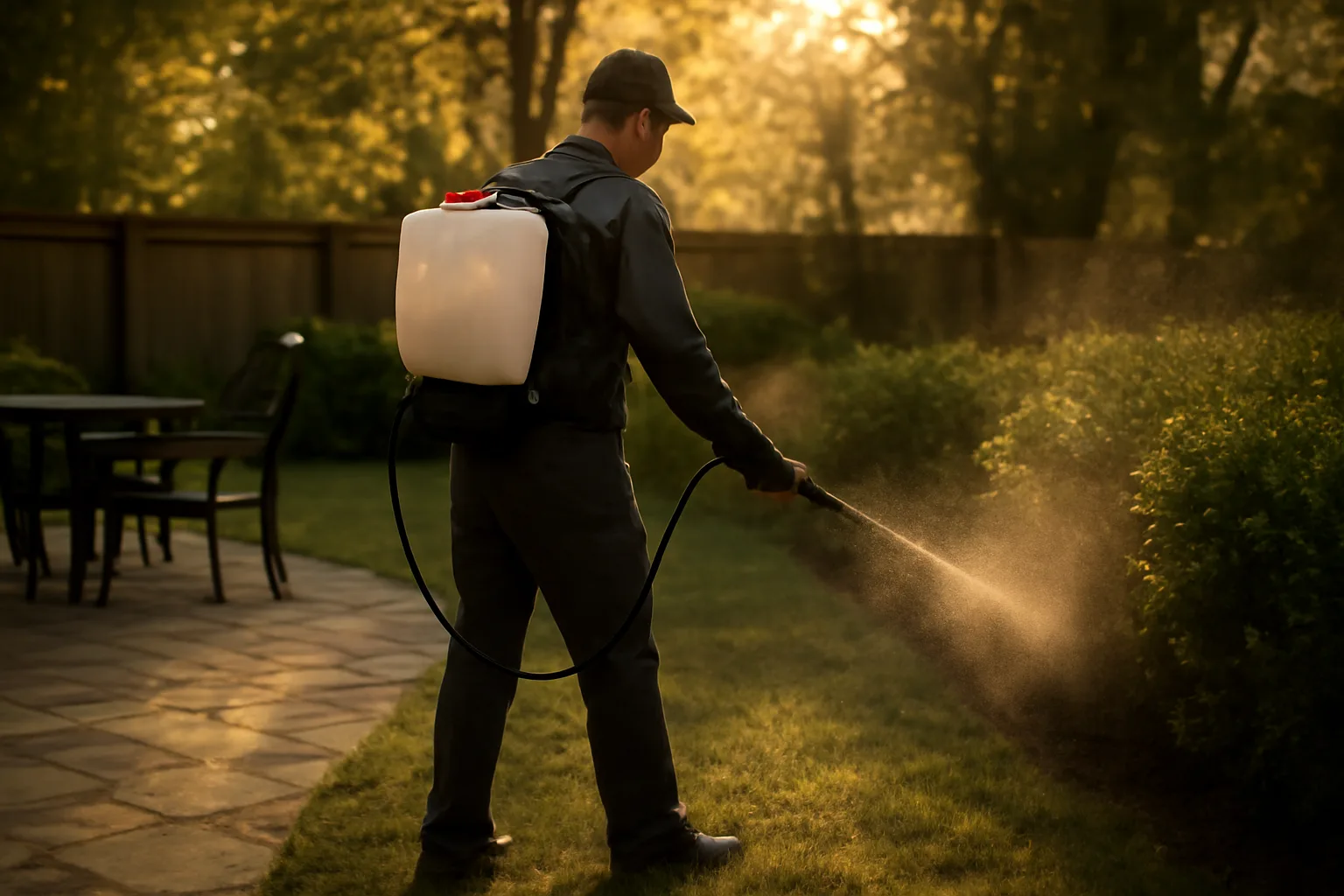
Both use an EPA-registered insecticide applied to yard vegetation, and both work by killing or repelling adult mosquitoes on contact and residual surfaces; the real difference is delivery method and how hands-off you want it to be. A barrier treatment is applied by a technician, typically with a backpack or truck-mounted sprayer, targeting the underside of leaves, shaded resting spots, fence lines, and mulch beds where adult mosquitoes hide during the day. It's applied on a schedule, generally every 10-14 days through mosquito season, since the residue breaks down with rain, UV exposure, and plant growth. A misting system is installed once, with tubing routed through the landscape and nozzles positioned at intervals, and it dispenses the same category of product automatically on a timer, often at dawn and dusk when mosquitoes are most active. It costs more upfront to install, but it removes the need to schedule visits and can be tuned for higher-frequency dosing. Neither eliminates mosquitoes from a yard entirely. Both knock populations down substantially when applied consistently and combined with standing-water removal, which remains the highest-leverage single action available to any homeowner [1] [2]. Which one makes sense depends on yard size, how often you're entertaining outdoors, and budget; this is exactly the kind of thing a free yard assessment is built to sort out, since it usually comes down to walking the specific property rather than a generic rule.
Frequently asked questions
How do I get rid of mosquitoes fast before an outdoor event?
A same-day fogging or ULV spray kills mosquitoes active at that moment but has no lasting effect, so it's best done an hour or two before guests arrive. For anything longer-term, pair it with source reduction (drain standing water within a day or two) and have personal repellent on hand for guests as backup.
How do you get rid of mosquitoes in the house overnight?
Check screens for gaps, drain any indoor standing water like plant saucers, and use a flashlight to find mosquitoes resting on walls or in dark corners; they're easy to spot and swat at night. An indoor aerosol labeled for flying insects, used per the label, handles what's already inside; a fan also disrupts their weak flight.
What plants repel mosquitoes the best?
Citronella grass, lemongrass, lavender, marigolds, and catnip all contain compounds with some lab-tested repellency, but potted or planted specimens release far less of the active oil than concentrated extracts, so the real-world effect is weak and localized at best. None replace an EPA-registered repellent or yard treatment.
When do mosquitoes go away for the winter?
Most species become inactive once nights stay consistently below about 50°F (10°C), typically mid-fall in northern climates and much later, or not at all, in warm southern states. Many mosquitoes survive winter as cold-hardy eggs that hatch in spring, so a hard freeze doesn't mean the problem is gone for good.
How do you get rid of mosquitoes in the backyard without chemicals?
Eliminate every source of standing water, since a bottle cap's worth is enough for a female to lay 100-300 eggs. Add fans to patios (mosquitoes are weak fliers), trim dense vegetation where they rest, and use physical barriers like screening. This reduces populations but won't match a scheduled barrier treatment for heavier infestations.
How do you get rid of ticks in the yard for good?
There's no permanent fix, but mowing grass short, clearing leaf litter, and building a 3-foot wood-chip or gravel barrier between lawn and woods significantly cuts tick migration onto the lawn. Perimeter acaricide treatment on that edge zone, where most yard ticks actually live, adds another layer of control.
What is a mosquito repellent plant?
It's a plant, like citronella grass, lemongrass, or catnip, that contains natural compounds mosquitoes are thought to avoid, often the same compounds used to derive commercial repellent oils. Growing the plant itself provides much weaker, shorter-lived protection than an EPA-registered product using the same active ingredient at proper concentration.
Do citronella candles actually keep mosquitoes away?
Only marginally, and only in still air close to the candle. Testing has found citronella-based repellents generally provide well under an hour of meaningful protection compared to hours from DEET or picaridin, and the CDC does not list citronella among its recommended repellent active ingredients.
Is DEET or picaridin better for keeping mosquitoes away?
Both are EPA-registered and CDC-recommended, and both work well when used as directed. DEET has the longest track record and is slightly more studied; picaridin is odorless and gentler on synthetic fabrics and plastics. Protection time depends more on concentration than on which of the two you pick.
How often should a yard be treated for mosquitoes?
Every 10-14 days through the active season is standard, since barrier treatment residue on leaves and vegetation breaks down with rain, sunlight, and new plant growth. Misting systems can be programmed for more frequent automatic dosing, often at dawn and dusk, without needing a technician visit each time.
Do bug zappers actually reduce mosquito bites?
Not much. Studies have found mosquitoes typically make up less than 1% of what electric bug zappers kill over a season; most of the kill is moths, beetles, and other non-biting insects. They're not an effective mosquito control tool on their own.
Can I get rid of mosquitoes without hiring a service?
Yes, to a degree. Rigorous, repeated standing-water removal, personal EPA-registered repellent, screens, and fans on patios can meaningfully cut bites for many yards. Heavier infestations, larger properties, or persistent breeding sites (like a neighbor's untreated pool or wooded edge) usually respond better to a scheduled professional barrier plan.
Sources
- CDC, Mosquito Life Cycle: Mosquitoes lay 100-300 eggs at a time and can breed in a bottle cap's worth of water; eggs hatch within days in warm conditions
- CDC, Preventing Mosquito Bites: CDC-recommended EPA-registered repellent active ingredients (DEET, picaridin, IR3535, OLE/PMD, 2-undecanone) and label directions
- EPA, Mosquito Life Cycle: Mosquito eggs can hatch and develop into biting adults in as little as a few days to a week in warm water
- Fradin & Day, New England Journal of Medicine, 2002: Comparative study of mosquito repellents found citronella-based products provided far shorter protection time than DEET-based repellents
- CDC, About Mosquitoes: Typical adult mosquito lifespan and limited flight range from breeding sites
- EPA, Bacillus thuringiensis israelensis (Bti) Registration: Bti is an EPA-registered larvicide that targets mosquito larvae in standing water
- CDC, Preventing Ticks in the Yard: Mowing lawns short and clearing leaf litter and brush reduces tick habitat around homes
- CDC, Community Tick Control: Perimeter-focused acaricide applications can substantially reduce residential tick abundance when applied correctly
- EPA, DEET Registration Review: DEET has been EPA-registered since the 1950s; higher concentrations mainly extend duration rather than increasing repellency strength
- University of Notre Dame / Journal of the American Mosquito Control Association research on electric insect traps: Studies of electric bug zappers found mosquitoes made up a very small share of total insects killed