Last updated 2026-08-14
TL;DR
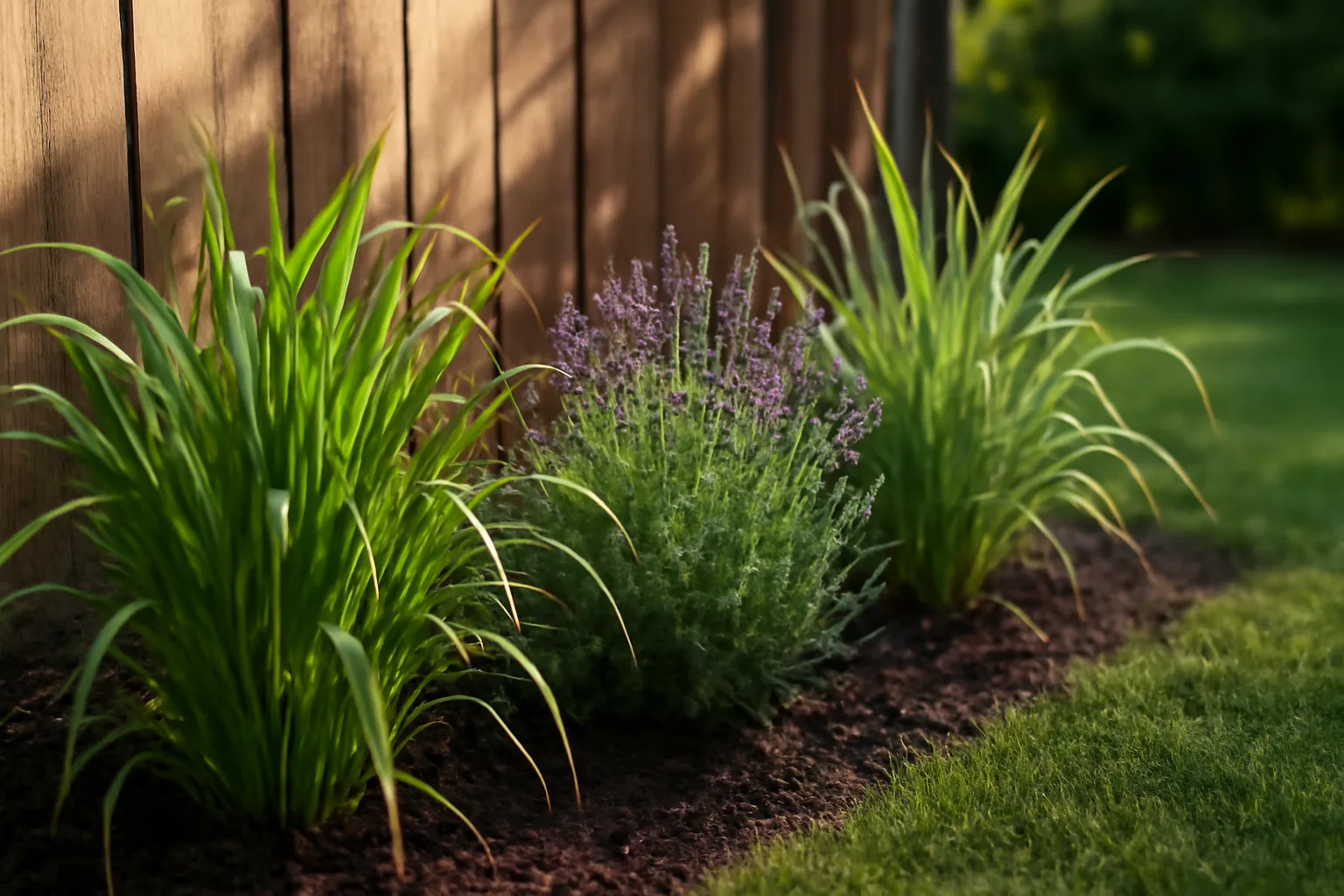
Some plants (citronella grass, lavender, catnip) contain oils that repel mosquitoes when extracted and concentrated, like in citronella candles or nepetalactone-based repellents. But a live plant sitting in a pot releases very little of that oil into the air. Plants can be a nice supplement to a yard, not a stand-in for barrier treatment or source reduction.
what is a mosquito repellent plant, exactly?
A mosquito repellent plant is any plant that produces compounds mosquitoes find irritating or confusing, usually aromatic oils stored in the leaves and stems. Citronella, lavender, lemongrass, and catnip all fall into this bucket. The oils only do their job when they're released into the air or rubbed onto skin in concentrated form. That's the catch nobody mentions on the plant nursery sign. A live citronella grass plant in a pot on your patio is not releasing meaningful amounts of citronella oil unless you crush the leaves or the plant is stressed and volatilizing its oils, which isn't a controllable, everyday thing. Commercial citronella candles and torches work (somewhat) because they burn the oil and disperse it as smoke and vapor across a small radius. A potted plant just sits there looking nice. The EPA registers several plant-derived active ingredients as repellents for use on skin, including oil of lemon eucalyptus (PMD), which the CDC lists among repellents effective against mosquitoes [1]. That's a real, tested product application. It's different from planting the source plant in your garden bed and hoping for a similar effect.
what plants repel mosquitoes, and what does the evidence actually say?
| Citronella grass (Cymbopogon nardus) | Citronellal, geraniol | Oil extract repels mosquitoes in lab and candle form | Live plant: minimal | |
|---|---|---|---|---|
| Catnip (Nepeta cataria) | Nepetalactone | A 2001 Iowa State study found nepetalactone repelled mosquitoes about as well as DEET in lab trials [2] | Live plant: minimal, oil extraction needed | |
| Lavender | Linalool, camphor | Crushed leaves/oil show repellent activity in small trials | Live plant: mild, only near crushed foliage | |
| Lemongrass | Citral, geraniol | Same family as citronella, similar oil chemistry | Live plant: minimal | |
| Marigolds (Tagetes) | Pyrethrum-like compounds, thiophenes | Some lab evidence against certain insects; mosquito-specific field data is thin | Live plant: minimal, mostly folklore | |
| Basil | Estragole, linalool | Limited studies show some larvicidal effect against mosquito larvae in water | Live plant: negligible for adult mosquitoes | |
| Rosemary | Camphor, cineole | Traditional use (burning sprigs), not well studied live | Live plant: negligible | The pattern is consistent: whenever a plant 'works,' it's the extracted, concentrated, or burned oil doing the work, not the leaf sitting in a garden bed. None of these plants are registered by the EPA as area repellents in their live form, and no extension service recommends relying on them as a primary control method. A 2018 review in the Journal of Insect Science and multiple university extension publications describe plant-based repellents as having 'variable and generally short-lived' effectiveness compared to registered synthetic repellents, largely because volatile oils degrade fast in open air [3]. |
Here's the honest rundown on the plants people ask about most, and what's actually been tested versus what's folklore. | Plant | Active compound | What's actually shown | Realistic yard effect |
so should I even bother planting anything?
Plant them if you like the way they look and smell. Don't plant them expecting a mosquito-free patio. Think of repellent plants as a mild, pleasant garnish, not a fence. If you want any real benefit from citronella or lemongrass, crush a few leaves and rub the oil on exposed skin or toss cuttings on a fire pit; that releases the compounds the way a candle does. Just sitting near the plant in a pot does close to nothing measurable. What plants can do well: fill in landscaping so you're not tempted to let leaf litter and dense ground cover build up near the house (both are mosquito resting spots), and give you an excuse to walk your yard weekly, which is when you'll spot the standing water problem that's actually breeding the mosquitoes biting you. That's a bigger win than the plant's oil chemistry.
how to keep mosquitoes away from your yard (the stuff that actually moves the needle)
Source reduction is the single highest-leverage thing a homeowner can do, full stop. The CDC states plainly that mosquitoes 'lay eggs near water' and that emptying, covering, or treating standing water is a primary prevention step [4]. Walk your property every 3 to 7 days (mosquito eggs to biting adults can take as little as 7 to 10 days depending on species and temperature) and dump anything holding water: clogged gutters, plant saucers, tarps, kiddie pools, tire swings, bird baths you're not refreshing, and low spots in the yard that puddle after rain. For water you can't dump, like ornamental ponds or rain barrels, the EPA-registered larvicide Bti (Bacillus thuringiensis israelensis) kills mosquito larvae without the broader toxicity profile of adulticides, and it's sold in donut-shaped 'dunks' at most hardware stores [5]. Beyond water, a barrier treatment (a residual spray applied to vegetation, mulch beds, and shaded resting areas) knocks down the adult population that's already flying around biting people. These treatments don't eliminate mosquitoes; nothing does, short of draining every wetland in a five-mile radius, which nobody wants. What a properly timed barrier does is reduce the population enough that you can sit on the patio at 7pm without getting eaten. Most professional programs apply on a 10 to 14 day cycle through the season because the residual effect of common pyrethroid products fades over roughly that window [6]. If you want a professional to map your yard's specific problem spots (shade, water, vegetation density) before recommending a plan, mosquito control services typically start with a free yard walk.
how to get rid of mosquitoes in the house
Indoor mosquitoes usually mean one of two things: they're riding in on you through doors, or something inside is holding water. Check first for anything holding standing water indoors: a forgotten vase, a plant saucer, a leaky pipe under a sink, even a floor drain that's dried out (dry drain traps let mosquitoes and sewer gas both in). Screen repair matters more than people think. A single tear in a screen door is a highway. Check screens on windows and doors for gaps, and make sure door sweeps seal at the bottom. For mosquitoes already inside, a few practical options: an indoor-labeled aerosol used per the label directions, a plug-in repellent device, or simply a fan (mosquitoes are weak fliers and struggle against moving air, which is part of why porch and ceiling fans measurably cut bite rates outdoors too ). Avoid outdoor-only pesticide products indoors; the EPA label will specify site of use, and using an outdoor product indoors is both a label violation and a real inhalation risk.
how to get rid of mosquitoes in backyard
Backyard mosquito control is really three jobs stacked together: remove their nurseries, remove their hiding spots, and reduce the adults that are already there. Skipping any one of the three leaves a gap the others can't fully cover. Job one is water. A female mosquito needs standing water to lay eggs, and some species can complete an egg-to-adult cycle in as little as 7 days in warm conditions [4]. Bottle caps, upside-down frisbees, tarps with a low spot, anything. Job two is vegetation management. Mosquitoes rest in shaded, humid vegetation during the heat of the day. Keeping grass mowed, trimming dense shrubs so air moves through them, and clearing leaf litter reduces resting habitat significantly. Job three is knockdown of the adults you can't remove habitat for (mosquitoes fly in from neighboring yards, wetlands, and storm drains regardless of how clean your own yard is; a lot of homeowners don't realize how far some species travel, though most home-invading mosquitoes stay within a few hundred yards of where they emerged). This is where barrier sprays or a misting system come in, applied to foliage, mulch beds, and shaded structures on a repeat cycle through the season. A natural mosquito repellent approach using essential-oil-based products can help for a single evening or event, but it typically doesn't have the residual power of an EPA-registered barrier product for ongoing control.
how to get rid of ticks (and how is this different from mosquito control?)
Ticks don't fly and don't breed in standing water, so the playbook is different even though people often lump tick and mosquito control together. Ticks climb tall grass and shrub edges (a behavior called 'questing') and grab onto passing hosts; they thrive in humid leaf litter and the border zone between lawn and woods. The CDC and university extensions recommend creating a tick-safe zone: a 3-foot-wide barrier of wood chips or gravel between lawn and wooded areas, since ticks dry out and generally won't cross it . Keep grass mowed short, clear leaf litter, and stack woodpiles away from the house (they attract the rodents ticks feed on). Professional tick control usually means a targeted spray at the yard perimeter, the leaf litter zone, and stone walls or woodpiles, since that's where the vast majority of ticks are actually found, rather than spraying the whole lawn. Products used are the same EPA-registered pyrethroid class often used for mosquitoes, applied per label to those specific habitats. If you're dealing with both pests, a tick repellent product for skin and clothing is a solid personal layer on top of yard-level control, especially before hiking or gardening in tall grass.
how do you get rid of ticks from your yard
Start with the landscape, then layer in treatment. The CDC's tick prevention guidance specifically calls out mowing the lawn frequently, removing leaf litter, clearing tall grasses and brush around the house, and keeping playground equipment and patios away from yard edges and in a sunny location, since ticks need humidity and shade to survive . A wood chip or gravel border between lawn and woods (the 3-foot tick-safe zone mentioned above) is one of the few landscaping interventions extension researchers have actually measured, and it's cheap to build yourself. For active infestations, a professional barrier application targeted at the yard perimeter and leaf litter zones, combined with keeping deer and rodent traffic down (fencing, securing trash, removing bird feeders that spill seed onto the ground), gives the best real-world reduction. No single yard treatment eliminates ticks completely, since they're constantly reintroduced by wildlife crossing the property, but a properly timed perimeter treatment combined with habitat cleanup meaningfully cuts encounter risk.
when do mosquitoes go away for the season?
Most mosquito species become inactive once temperatures consistently drop below about 50°F, since that's roughly the threshold below which they stop flying and feeding, though the exact cutoff varies by species . In much of the northern US that's late October or November; in the Gulf Coast and southern Sun Belt states, some species stay active nearly year-round because nights rarely get cold enough to shut them down. Mosquitoes don't actually die off completely in cold climates either. Many species overwinter as eggs (which can survive freezing and hatch the following spring when water warms) or as adult females that find a sheltered spot, like a crawl space or hollow log, and go dormant until temperatures rise again. That's why the first warm week in spring can bring a surprising number of bites almost immediately; the population never fully reset over winter. Because season length is so regional, check your local mosquito control district or state health department for area-specific guidance rather than a national date. A mosquito control near me search will usually surface your local extension or district's seasonal activity data too.
how to get rid of mosquitoes: putting the whole plan together
There's no single fix, but there is a clear order of operations that actually works, backed by CDC and EPA guidance rather than folklore. First, eliminate every bit of standing water you can reach; this is free and it's the step with the biggest population-level effect, since it stops new mosquitoes from being born on your property [4]. Second, manage vegetation: mow, trim, and clear leaf litter so adults have fewer places to rest during the day. Third, use EPA-registered repellents on skin and clothing (DEET, picaridin, IR3535, or oil of lemon eucalyptus are the CDC-recommended active ingredients) for personal protection when you're outside [1]. Fourth, if the yard is still bad after doing all of the above, consider a professional barrier treatment or misting system on a repeat cycle, since that's the only step that knocks down the adult population that's flying in from beyond your fence line. Repellent plants can be part of the landscaping in that plan, but they're a garnish, not a control method. If you want a plan tailored to your specific yard (how much shade, what's holding water, how close the tree line is), a mosquito repellent strategy that layers personal protection with yard treatment beats any single method alone. Duskproof builds that kind of plan starting with a free yard walk: Get a free yard assessment.
barrier spray vs. misting system vs. plants: how do they compare?
| Repellent plants (live) | Minor ambient effect at best | N/A, ongoing | Aesthetic mostly; negligible mosquito reduction | |
|---|---|---|---|---|
| Personal repellent (DEET, picaridin, OLE) | Protects the person wearing it | Reapply per label, often every 2-6 hrs | Strong, but only protects that individual | |
| Source reduction | Removes breeding sites | Weekly yard check | High impact, free, addresses root cause | |
| Professional barrier spray | Residual knockdown on vegetation/resting areas | Every 10-14 days in season [6] | Meaningful population reduction, not elimination | |
| Misting system | Automated barrier spray on a timer | Programmable, often daily/dusk cycles | Convenient, consistent, higher upfront setup | The honest takeaway: plants sit at the bottom of that list for actual mosquito reduction, personal repellent is the strongest single layer for protecting one person outdoors, and source reduction is the free, high-impact step almost everyone under-does. Barrier treatments and misting systems are what close the gap for people who want to actually use their yard in the evening without a repellent regimen. Natural mosquito repellent products fall somewhere between plants and synthetic repellents in effectiveness and typically need more frequent reapplication. |
Homeowners comparing options usually want to know what each method actually does, how often it needs attention, and what it realistically achieves. Here's the straight comparison. | Method | What it does | Typical frequency | Realistic result |
Frequently asked questions
What plants repel mosquitoes the best?
Citronella grass, lemongrass, catnip, and lavender contain oils shown to repel mosquitoes when extracted and concentrated. A 2001 Iowa State study found catnip's nepetalactone compound repelled mosquitoes about as effectively as DEET in lab conditions. Live potted versions of these plants release far less oil into the air than a candle or crushed-leaf application, so don't expect a yard full of them to clear the air on their own.
Do mosquito repellent plants actually work in a live, potted form?
Not well. The repellent compounds are stored inside the leaves and only released in meaningful amounts when crushed, burned, or extracted into oil, the way citronella candles work. A live plant sitting undisturbed in a garden bed or pot puts very little of that oil into the air, so it won't meaningfully reduce bites on its own.
How do I get rid of mosquitoes in my house?
Check for standing water indoors (vases, plant saucers, dry floor drains), repair torn window and door screens, and use an indoor-labeled aerosol or plug-in repellent per its label. Fans help too, since mosquitoes are weak fliers. If mosquitoes keep appearing indoors despite these steps, the source is likely just outside a door or gap, so check the yard's standing water and vegetation next.
How to keep mosquitoes away from a patio or yard?
Eliminate standing water weekly, keep grass mowed and shrubs trimmed to reduce daytime resting spots, use a fan on the patio (mosquitoes struggle to fly against moving air), apply an EPA-registered personal repellent, and consider a professional barrier treatment on a 10 to 14 day cycle if the yard has persistent pressure from nearby water or woods.
When do mosquitoes go away for the season?
Most species stop flying and feeding once temperatures consistently drop below about 50°F, which typically happens by late October or November in northern states. In warmer southern regions, some species stay active nearly year-round. Check your local mosquito control district or health department, since exact timing varies a lot by region and species.
How do you get rid of ticks from your yard?
Mow the lawn frequently, clear leaf litter, trim brush along the woodline, and build a 3-foot-wide wood chip or gravel barrier between lawn and woods, since the CDC notes ticks generally won't cross a dry barrier like that. Targeted perimeter and leaf-litter treatments from a pest professional add another layer, especially if wildlife regularly crosses the property.
What is a mosquito repellent plant?
It's a plant that naturally produces aromatic oils, like citronellal, geraniol, or nepetalactone, that mosquitoes find irritating. Citronella grass, catnip, lavender, and lemongrass are the most commonly cited examples. The oils only work as a real repellent once extracted or concentrated, such as in a candle, torch, or skin-applied oil, not simply by having the live plant nearby.
How to get rid of mosquitoes in the backyard for good?
There's no permanent fix; mosquitoes are always capable of flying in from nearby wetlands, storm drains, or a neighbor's yard. The realistic goal is population reduction: remove standing water weekly, manage vegetation, and apply a residual barrier treatment on a repeat cycle through the season to keep numbers low enough that you can use the yard comfortably.
Can I plant citronella grass instead of using bug spray?
No. Citronella grass is real, and its extracted oil is EPA-registered in candle and topical products, but the live plant alone doesn't release enough oil to meaningfully protect you. If you want to try it, crush a few leaves and rub the released oil directly on skin or clothing, similar to how a candle burns the oil to release it.
What actually gets rid of mosquitoes fastest in a yard I need to use tonight?
For a single evening: run a fan on the patio, use an EPA-registered personal repellent (DEET, picaridin, IR3535, or oil of lemon eucalyptus), and light citronella torches or candles in the seating area. None of this is a long-term fix; it's short-term mitigation for one event.
Do bug zappers or ultrasonic devices work better than plants?
Bug zappers mostly kill non-biting insects and moths, not mosquitoes, based on multiple entomology studies showing mosquitoes make up a tiny fraction of zapper kills. Ultrasonic repellent devices have no credible evidence behind them. Both perform worse than simple source reduction and are generally not worth the money compared to yard cleanup or a barrier treatment.
How often should a professional mosquito barrier treatment be applied?
Most professional programs apply every 10 to 14 days through mosquito season, since the residual effect of common pyrethroid-based barrier products fades over roughly that window. Rain, heavy watering, or fast plant growth can shorten the effective window, which is why a fixed cycle rather than a one-time spray is standard practice.
Sources
- CDC, Preventing Mosquito Bites: EPA-registered repellent active ingredients including oil of lemon eucalyptus (PMD) are recommended for effectiveness against mosquitoes
- Journal of Insect Science, plant-based repellent efficacy review: Plant-based repellents show variable and generally short-lived effectiveness compared to registered synthetic repellents
- CDC, Mosquito Life Cycle and Habitat: Mosquitoes lay eggs near water and complete egg-to-adult development quickly under warm conditions
- EPA, Pyrethroid pesticide fact sheets: Residual effect of common pyrethroid barrier products informs repeat application cycles of roughly 10-14 days
- CDC, Preventing Tick Bites on People: Creating a tick-safe zone with wood chips or gravel barriers and clearing leaf litter reduces tick habitat around the home
- CDC, Mosquitoes and temperature/seasonal activity: Mosquito activity drops off as temperatures fall, with most species becoming inactive around 50°F