Last updated 2026-08-14
TL;DR
The most effective outdoor mosquito repellent approach layers three things: an EPA-registered skin repellent (DEET, picaridin, or IR3535) for personal protection, standing-water removal weekly, and a professional barrier spray on a 10-14 day cycle for yard-wide knockdown. No single product eliminates mosquitoes; combining methods gets you closest to an evening outside without bites.
How do you get rid of mosquitoes outside?
You get rid of mosquitoes outside by attacking three things at once: the water they breed in, the vegetation they hide in during the day, and the adults already flying around your yard. No single step does the whole job, and anyone promising total elimination is overselling. Start with water. The CDC states that mosquitoes need only about a bottle cap's worth of standing water to complete their life cycle from egg to adult, and that cycle can take as little as 7 to 10 days depending on species and temperature [1]. Walk your property once a week and dump anything holding water: clogged gutters, saucers under potted plants, tarps, kiddie pools, tire swings, and the low spots in tarps covering firewood or grills. Next, deal with resting sites. Adult mosquitoes spend most of the day in shaded, humid vegetation, not flying around in open sun. Keeping grass mowed short, trimming back dense shrubs, and thinning overgrown ivy or hostas removes the daytime hiding spots that let populations build up near your patio. Finally, treat the adults. This is where a barrier spray comes in: an EPA-registered pesticide applied to the underside of leaves, shaded turf, and other resting surfaces around the yard's perimeter. It doesn't reach every mosquito, but it knocks the population down significantly for a couple of weeks, which is why services reapply on a 10 to 14 day cycle rather than treating once a season. If your yard backs onto a wooded lot, wetland, or neighbors with standing water you don't control, expect diminishing returns from your own efforts alone, since adult mosquitoes can fly a mile or more from where they hatched. A mosquito control program timed to your local mosquito season does more here than any single home fix.
How do you keep mosquitoes away from your patio or yard?
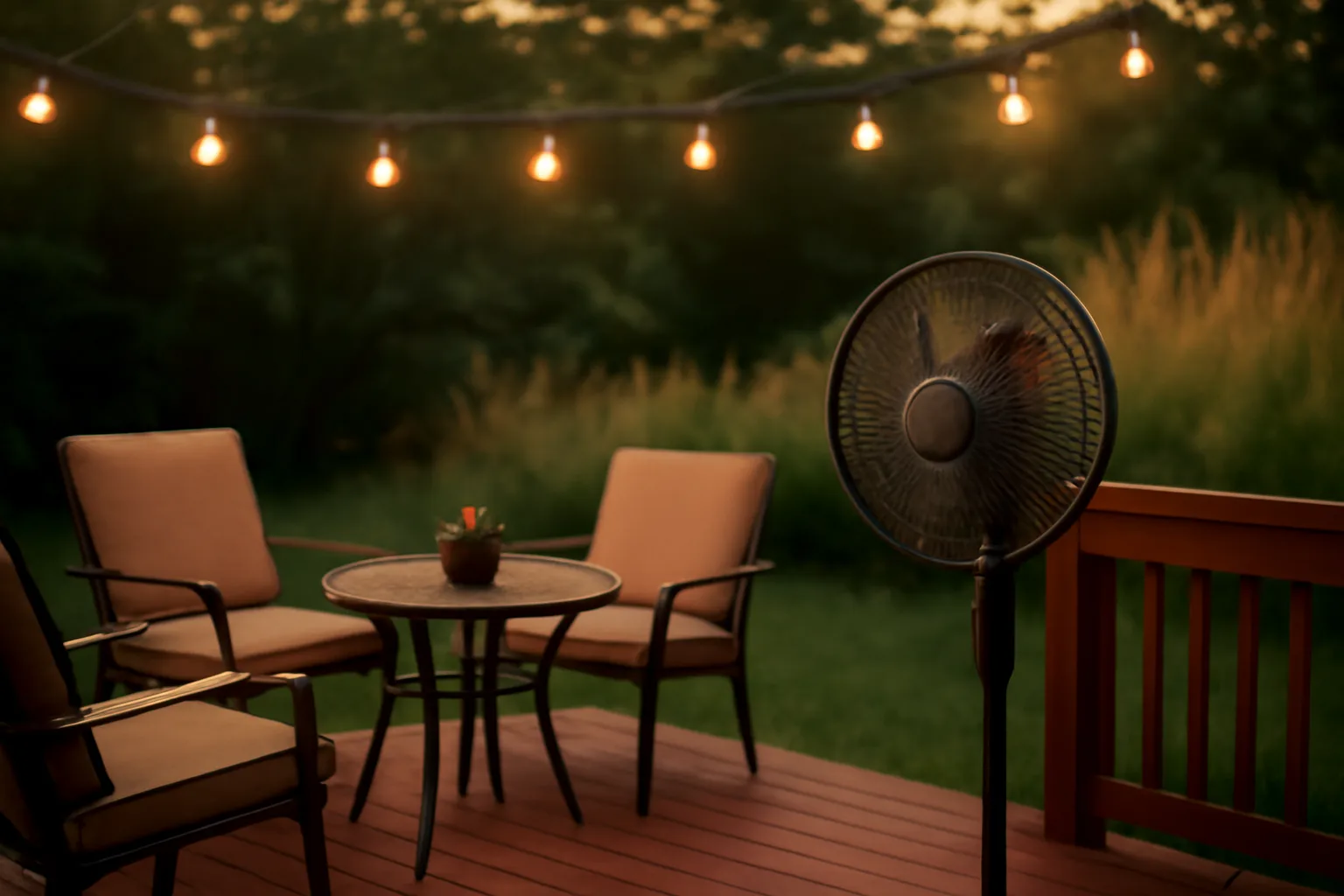
Keeping mosquitoes away long-term means combining source reduction, a barrier treatment, and personal repellent for the evenings when you're actually sitting outside. Think of it as layers, not a single silver bullet. Source reduction is free and does the most good per hour spent. The EPA's mosquito control guidance lists standing water removal as the first line of defense, ahead of any pesticide application [2]. Empty anything that holds water after rain, fix downspouts that pool, and stock ornamental ponds with mosquito-eating fish like Gambusia if local regulations allow it. A barrier spray extends that protection to the resting sites you can't eliminate: tree lines, fence rows, tall grass at the property edge. These treatments target adult mosquitoes on contact and leave a residual effect on foliage that keeps working for one to two weeks, which is the basis for the standard 10 to 14 day retreatment schedule most yard services use. Misting systems are the higher-end version of the same idea: a plumbed system around the yard's perimeter that releases a fine mist of an EPA-registered insecticide on a timer, usually at dawn and dusk when mosquitoes are most active. They cost more upfront and require ongoing refills, but for people who entertain outside constantly or live somewhere with brutal mosquito pressure, they cut down on manual reapplication. Fans matter more than people expect. Mosquitoes are weak fliers, generally topping out around 1 to 1.5 miles per hour in flight speed, so a box fan or ceiling fan on a patio creates enough airflow to keep most of them from landing on you [3]. It's one of the cheapest, most underrated tools in the whole toolkit. For the evenings themselves, an EPA-registered topical repellent on skin and clothing is the last layer. A natural mosquito repellent made from plant oils can help for short exposure, but the EPA-registered synthetic options have more consistent testing behind them for longer coverage times.
What ingredients actually work in an outdoor mosquito repellent?
| DEET (20-30%) | 4-8 hours | Longest history of testing; EPA-registered since 1957 [4] | |
|---|---|---|---|
| Picaridin (20%) | 4-8 hours | CDC-recommended, lower odor than DEET | |
| IR3535 | 4-8 hours | CDC-recommended; found in some skincare-adjacent brands | |
| OLE / PMD | 4-6 hours | CDC-recommended; not for children under 3 | |
| 2-undecanone | Variable, less data | Newer to consumer market | None of these is a yard treatment. They're personal protection for skin and clothing. For the yard itself, you're looking at mosquito repellent products labeled for outdoor area or barrier use, which is a different EPA registration category entirely. |
The EPA and CDC recommend a short list of active ingredients backed by registered testing: DEET, picaridin, IR3535, oil of lemon eucalyptus (OLE, the synthesized version called PMD), and 2-undecanone. If a repellent's label doesn't list one of these, the evidence behind it is thinner. DEET has the longest track record. It's been registered with the EPA since 1957 and remains one of the most studied insect repellents in existence [4]. Concentrations from 10% to 30% are common on store shelves; higher percentages mean longer protection time, not stronger protection, since DEET doesn't kill mosquitoes, it disrupts their ability to sense you. Picaridin (also called icaridin) is now recommended at similar effectiveness to DEET by the CDC, with the advantage of less odor and less tendency to degrade plastics or synthetics. It's been used in Europe and Australia longer than in the US, where it became more widely available after 2005. Oil of lemon eucalyptus, or its synthesized form PMD, is the one plant-based option the CDC puts in the same recommended tier as DEET and picaridin, but with a caveat: the CDC explicitly states that OLE products should not be used on children under 3 years old. Products labeled simply "lemon eucalyptus oil" without EPA registration haven't been tested to the same standard and shouldn't be assumed equivalent. | Active ingredient | Typical protection time | CDC/EPA notes |
What plants repel mosquitoes, and is a mosquito repellent plant real?
A mosquito repellent plant is a plant that contains natural compounds mosquitoes find irritating or masking, like citronella, lemongrass, catnip, marigold, or lavender. The honest answer is that these plants have measurable repellent compounds in their oils, but simply growing them in your yard does very little, because the oil has to be extracted, concentrated, and applied to skin to have any real effect. Citronella grass is the classic example. Citronella oil is EPA-registered as an active ingredient in some repellent products, and studies on citronella-based repellents show real but shorter-lived protection compared to DEET, often needing reapplication every 1-2 hours rather than 4-8. A potted citronella plant on the patio releases very little of that oil into the air on its own; you'd need to crush the leaves and rub the oil on skin to get any meaningful effect, and even then it fades fast. Catnip (Nepeta cataria) contains nepetalactone, which some lab studies have found repels mosquitoes at concentrations comparable to DEET in controlled settings. Field performance is much less impressive, and there's no product on the market that reliably replicates lab conditions in your backyard. Marigolds, lavender, lemongrass, and mint all contain some level of repellent compound too. Planting a border of these around a patio might provide a marginal, localized effect, especially if you crush leaves occasionally to release oil, but none of them replace an actual repellent or a yard treatment program. Think of ornamental plantings as a nice-to-have, not a control strategy. If you want more detail on essential-oil-based and plant-derived options that do have EPA registration and testing behind them, that's covered in our guide to natural mosquito repellent products, which is a different thing from just growing herbs.
How do you get rid of mosquitoes in the house?
Getting rid of mosquitoes in the house starts with finding how they're getting in, since indoor mosquitoes are almost always ones that snuck through a door, gap, or torn screen rather than ones breeding indoors. Check door sweeps, window screens for tears, and any gaps around utility lines entering the house. Standing water indoors is rarer but does happen: a clogged AC condensate line, an overwatered houseplant saucer, or a forgotten vase can be enough for a female mosquito to lay eggs, especially indoors where temperature stays constant. Check these spots if you're seeing repeat mosquitoes rather than the occasional one that flew in. For mosquitoes already inside, a few work: an aerosol labeled for indoor flying insect use (check the EPA registration number on the label), a fly swatter for the patient, or simply turning off lights near open doors and windows at dusk, since mosquitoes and other flying insects are drawn to light contrast. Bug zappers marketed for indoor use are largely ineffective against mosquitoes specifically; university extension research has repeatedly found zappers kill far more non-target insects than mosquitoes, since mosquitoes aren't strongly attracted to UV light the way many moths are [5]. Screens are the actual fix. If you're getting mosquitoes inside repeatedly, patch or replace torn screens before buying any product. It's the least glamorous fix and the one that actually works.
When do mosquitoes go away for the season?
Mosquitoes typically die back once nighttime temperatures drop consistently below about 50°F (10°C), though the exact timing varies a lot by region, species, and how mild the fall is. Most mosquito species become inactive, not necessarily dead, in that range, and adult activity generally stops well before the first hard freeze. In much of the northern and midwestern US, that means mosquito activity tapers off from late September through October. In the Gulf Coast, Florida, and parts of the Southwest, mosquitoes can remain active nearly year-round, with only brief lulls during the coolest weeks. The CDC notes that mosquito season length and intensity is heavily influenced by regional climate and recent rainfall, which is why there's no single national end date [6]. Some species survive winter as adults in protected spots like culverts, sheds, and tree holes, becoming active again on unseasonably warm winter days; others overwinter as eggs that hatch when spring rains return. That's part of why a barrier treatment program is usually built around 10 to 14 day cycles from spring through fall rather than a single spring application, since the pest pressure resets and rebuilds throughout the season. Your local mosquito control district or agricultural extension office tracks trap counts and can tell you more precisely when activity typically drops in your specific area, since a date that's accurate for coastal Georgia is meaningless for inland Minnesota.
How do you get rid of mosquitoes in your backyard specifically?
Getting rid of mosquitoes in the backyard (as opposed to the whole property or the house) means focusing on the specific zone where you actually spend time: the patio, deck, play set, or fire pit area. The strategy scales down from whole-yard source reduction to targeted treatment of that zone. First, audit water within 100 feet of that spot, since that's roughly the flight range where most of your local mosquito problem originates, even though adults can travel farther. Gutters, bird baths, clogged drainage, and low spots in the lawn after rain are the usual suspects. Second, treat the vegetation bordering that zone. Mosquitoes rest on the undersides of leaves in shaded, humid spots during the day, so a barrier spray focused on the shrub line, fence, and tall grass around the patio does more good per dollar than blanket-treating the whole lawn. This is the logic behind how professional barrier treatments are typically mapped: perimeter and resting sites, not open turf. Third, add a fan if the space allows it. As mentioned above, mosquitoes are slow, weak fliers, and a fan moving air across a seating area meaningfully cuts down landings, no chemicals required. Fourth, time your outdoor plans around peak activity. Many common backyard species, including Culex and some Aedes species, are most active at dawn and dusk, though Aedes aegypti and Aedes albopictus (which spread Zika, dengue, and chikungunya) are notably more active during the day too, which is part of why the CDC flags them separately from a simple dusk-avoidance strategy [7]. If you've done all of this and the backyard is still unusable most evenings, that's usually a sign the yard needs a recurring barrier program rather than more one-time fixes. This is genuinely one of the more common reasons homeowners call a service like Duskproof for a free yard assessment: DIY gets you partway, but persistent pressure from a nearby wetland, storm drain, or neighbor's untreated yard needs a professional-grade product and a maintained schedule to keep up with.
How do you get rid of ticks in your yard?
Getting rid of ticks in the yard means shrinking the habitat they need (leaf litter, tall grass, brush) and creating a barrier zone that discourages the deer and rodents that carry ticks onto your property in the first place. It's a different strategy from mosquito control because ticks don't fly and don't breed in standing water; they ride in on wildlife and wait in vegetation for a host to brush past. The CDC and many state health departments recommend a technique called the "tick-safe zone": keep a 3-foot-wide barrier of wood chips or gravel between lawn and any wooded or brushy area, since ticks rarely cross open, dry surfaces to reach the middle of a lawn . Keep grass mowed short, clear leaf litter, and stack woodpiles neatly and in dry, sunny spots rather than shaded ones. Discourage deer if you can. Fencing, removing bird feeders that attract deer indirectly through spilled seed, and avoiding deer-attracting plants near the house all help, since deer are a primary host for adult ticks in much of the US. Acaricide (tick-specific pesticide) treatments applied to the yard's edge and vegetation, the same general zones targeted for mosquito barrier sprays, are the professional option for actual population reduction, since landscaping changes alone reduce risk but don't eliminate ticks already present. The CDC states that professionally applied pesticides can reduce the number of ticks in treated yards, though it also notes this should be combined with personal protection since no yard treatment eliminates tick-borne disease risk entirely . For personal protection while you're working in the yard or hiking, an EPA-registered tick repellent applied to skin and clothing, plus a full-body tick check afterward, is the CDC's standard recommendation alongside any yard-level treatment .
How do barrier sprays and misting systems actually compare?
| Setup | None; technician visits | Permanent tubing/nozzle install | |
|---|---|---|---|
| Schedule | Every 10-14 days | Automated, timer-based | |
| Upfront cost | Low to none | Higher (installation) | |
| Ongoing cost | Per-visit or seasonal contract | Refill/service cost | |
| Best for | Most yards, seasonal use | Frequent outdoor entertaining, high-pressure areas | Neither approach eliminates mosquitoes from a property; both knock down the active population and keep it suppressed as long as treatment continues. If you stop, the population rebuilds from surrounding untreated areas, typically within a couple of weeks, which is exactly why the 10 to 14 day cycle exists rather than a single spring treatment. |
Barrier sprays and misting systems both use EPA-registered insecticides applied to yard vegetation, but they differ in method, cost structure, and how often they're refreshed. Neither is a permanent fix; both are maintenance programs. A barrier spray is applied by a technician (or a homeowner with a backpack sprayer) directly to foliage, fence lines, and resting sites, typically on a 10 to 14 day cycle through the mosquito season. It requires no permanent equipment and the cost is generally per-visit or per-season contract based. A misting system is a fixed installation: tubing runs along the yard's perimeter with nozzles that release a fine mist on a programmed schedule, usually around dawn and dusk. It requires an upfront installation cost and periodic refills of the insecticide reservoir, but it removes the need to schedule a technician visit every couple of weeks, since it runs automatically. | Factor | Barrier spray | Misting system |
What does a professional yard assessment actually check for?
A professional yard assessment typically walks the property looking for standing water sources, mosquito and tick resting sites (shrub lines, tall grass, leaf litter, wood piles), sun and shade patterns that affect where pests concentrate, and any structural issues like clogged gutters or drainage problems that create breeding habitat. It's the diagnostic step before any treatment plan gets built. A good assessment should also account for what's around your property, more than on it: a neighboring wetland, retention pond, or wooded lot changes how aggressive a treatment schedule needs to be, since adult mosquitoes can fly in from well beyond your fence line. Ignoring that context is a common reason DIY yard treatments underperform: you can treat your own half-acre perfectly and still get hammered by mosquitoes drifting in from the woods next door. At Duskproof, this is the starting point for every service plan: a walk of the property to map water sources and resting sites, followed by a recommendation for either a seasonal barrier spray on the standard 10-14 day cycle or an installed misting system, depending on the pressure level and how the property is used. There's no upsell script here, it's a genuine read on what the yard needs, since a small suburban lot and a five-acre property backing onto woods need very different plans. If you're trying to figure out which approach fits your situation, mosquito control near me covers how to evaluate local providers, and a free yard assessment is the fastest way to get a specific answer for your property rather than a generic recommendation.
Frequently asked questions
How do I get rid of mosquitoes fast?
For immediate relief, run fans on your patio (mosquitoes are weak fliers), apply an EPA-registered repellent with DEET or picaridin to skin, and dump any standing water within sight. These give same-day results. Lasting reduction takes longer and usually means removing breeding sites over 1-2 weeks plus a repeat barrier treatment, since adult mosquitoes already present won't vanish instantly.
How do I keep mosquitoes away without spraying chemicals on my body?
Combine source reduction (empty standing water weekly), a fan on your patio, mosquito-repellent plants like citronella or lemongrass planted nearby (modest effect), and a yard-wide barrier treatment applied to vegetation rather than skin. None of these alone matches a skin repellent's effectiveness, but stacked together they cut exposure meaningfully for evenings outside.
How do I get rid of ticks on my body or clothes?
Remove attached ticks with fine-tipped tweezers, gripping close to the skin and pulling straight up steadily, per CDC guidance. Check clothing and gear for unattached ticks; tumble dry clothes on high heat for 10 minutes to kill any remaining ticks. Shower within two hours of coming indoors, which the CDC notes may reduce tick attachment risk.
What is a mosquito repellent plant, exactly?
A mosquito repellent plant contains natural oils, like citronellal, nepetalactone, or geraniol, that mosquitoes find irritating in concentrated form. Growing the plant alone releases very little of that oil into the air; the effect is real but small unless leaves are crushed and the oil applied directly to skin, which is a different use than ornamental planting.
What plants repel mosquitoes the best?
Citronella grass, lemongrass, catnip, marigold, and lavender all contain compounds shown in lab studies to have some repellent effect on mosquitoes. None perform close to an EPA-registered skin repellent in real-world conditions, and simply having them in the yard provides only a marginal, localized effect rather than yard-wide protection.
How do I get rid of mosquitoes in my house?
Check screens and door sweeps for gaps, since indoor mosquitoes almost always enter from outside rather than breed indoors. Eliminate any indoor standing water (clogged AC lines, plant saucers). Use an indoor-labeled aerosol or swatter for mosquitoes already inside. Bug zappers are largely ineffective against mosquitoes specifically, per university extension research.
How do I get rid of mosquitoes in the house long-term?
Long-term indoor control means fixing entry points permanently: repair torn screens, add door sweeps, and seal gaps around utility penetrations. Combine this with outdoor source reduction and a yard barrier treatment, since fewer mosquitoes outside means fewer chances for them to slip indoors when doors open.
When do mosquitoes go away for the year?
Mosquito activity typically drops once nighttime temperatures fall consistently below about 50°F, but timing varies widely by region. Northern and midwestern US areas usually see activity taper off from late September through October, while Gulf Coast and Florida areas can see mosquitoes active nearly year-round. Check your local extension service for area-specific timing.
How do I get rid of mosquitoes in my backyard when nothing seems to work?
If you've removed standing water, trimmed vegetation, and used a fan and repellent without success, the pressure is likely coming from beyond your property line, a wetland, storm drain, or untreated neighboring yard. That situation typically needs a recurring professional barrier treatment on the yard's perimeter rather than more DIY effort.
How do you get rid of ticks from your yard permanently?
There's no permanent fix, since ticks continually arrive via deer, rodents, and birds. The realistic goal is ongoing reduction: maintain a tick-safe zone of wood chips or gravel between lawn and woods, mow regularly, clear leaf litter, and apply a professional acaricide treatment to vegetation edges, per CDC guidance on tick-safe landscaping.
Does citronella actually work outdoors?
Citronella oil is EPA-registered and does have measurable repellent effect when applied to skin, but studies show it provides shorter protection than DEET or picaridin, often needing reapplication every 1-2 hours. Citronella candles and torches provide a mild, localized effect at best and shouldn't be relied on as a sole defense.
Is DEET or picaridin better for outdoor mosquito repellent?
Both are recommended by the CDC and provide similar protection times, typically 4-8 hours depending on concentration. DEET has a longer testing history (EPA-registered since 1957); picaridin has less odor and doesn't degrade plastics or synthetic fabrics the way DEET can. Either is a reasonable primary choice.
How often should a yard mosquito barrier spray be reapplied?
Most professional barrier treatments are reapplied every 10 to 14 days through the active mosquito season. This interval matches roughly how long the residual effect on treated foliage lasts and how quickly a mosquito population can rebuild in an area from eggs and nearby breeding sites.
Sources
- CDC, Mosquito Life Cycle: Mosquitoes need only a small amount of standing water to complete their life cycle, which can take about 7-10 days
- CDC, Mosquito Bite Prevention: Mosquitoes are weak fliers and airflow from fans reduces their ability to land on people
- CDC, Preventing Mosquito Bites: CDC-recommended repellent active ingredients include DEET, picaridin, IR3535, oil of lemon eucalyptus/PMD, and 2-undecanone; OLE not recommended for children under 3
- CDC, Mosquitoes and Climate: Mosquito season length and intensity varies significantly by region and recent rainfall/climate conditions
- CDC, Aedes aegypti and Aedes albopictus: Aedes aegypti and Aedes albopictus mosquitoes, which spread Zika, dengue, and chikungunya, are more active during daytime than typical dusk-active species
- CDC, Preventing Ticks in the Yard: Tick-safe zone landscaping (wood chip barriers, mowing, leaf litter removal) plus professional pesticide application reduces tick numbers in yards
- CDC, Tick Removal: Correct tick removal method using fine-tipped tweezers, and showering soon after outdoor exposure