Last updated 2026-08-14
TL;DR
Flea spray for yard use works best as an insect growth regulator plus adulticide combo applied to shaded, humid spots like under decks and along fence lines, not the whole lawn. Mow first, treat every 2-3 weeks during flea season, and expect knockdown, not elimination. Ticks need separate treatment since flea sprays don't reliably control them.
Does flea spray for yard actually work?
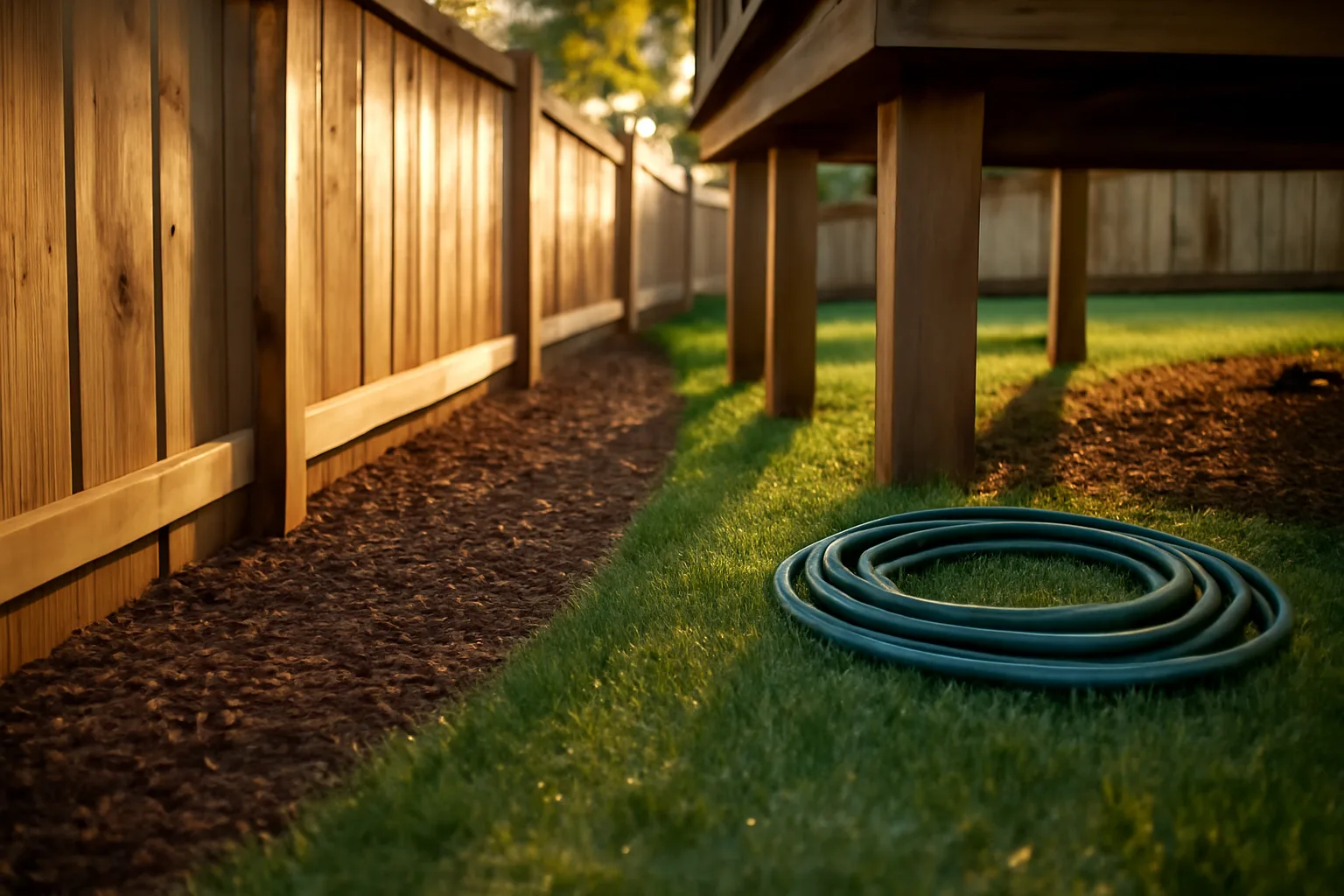
Yes, but only where fleas actually live. Fleas don't spread evenly across a lawn. Adult fleas, eggs, larvae, and pupae cluster in shaded, humid microhabitats: under porches and decks, along fence lines, in mulch beds, and anywhere pets nap outside. Ohio State University Extension entomologists note that outdoor flea populations concentrate in these shaded, moist refuges rather than open sunny turf, which is also why blanket-spraying an entire yard wastes product and money [1]. A well-timed spray with an adulticide (kills adult fleas on contact) combined with an insect growth regulator, or IGR, (stops eggs and larvae from maturing) can cut outdoor flea populations sharply within days. The catch is that flea sprays don't sterilize your yard. Pupae in the cocoon stage can resist contact insecticides for weeks, and new fleas can hitch a ride in on wildlife (rabbits, raccoons, opossums) days after you treat. That's why single treatments underperform and seasonal cycles do better. If you're comparing this to whole-yard mosquito work, the logic is similar to what we cover in mosquito control: target the habitat, more than the pest, and repeat on a schedule instead of treating once and hoping.
What ingredients should I look for in a yard flea spray?
The most reliable outdoor flea products combine two active ingredient classes: a fast-knockdown adulticide and a longer-acting IGR. Common adulticides in lawn and garden flea products include permethrin, bifenthrin, and cyfluthrin, all pyrethroids that are EPA-registered for outdoor flea and tick control when applied per the product label [2]. IGRs like pyriproxyfen or methoprene mimic flea juvenile hormone, preventing larvae from developing into biting adults; they don't kill on contact but break the reproductive cycle over the following weeks. Some products also include nylar or S-methoprene specifically labeled for premise (yard) flea control, distinct from the spot-on treatments made for pet skin. Read the label. A product labeled only for indoor carpet or pet application is not legal or effective to spray across a lawn, and using any pesticide in a manner inconsistent with its labeling is a violation of the Federal Insecticide, Fungicide, and Rodenticide Act (FIFRA) [3]. Granular versions exist too, usually needing water activation to release the active ingredient into the soil surface where flea larvae feed on organic debris. These can work well in mulch beds and under shrubs where liquid spray runs off rather than settling. No yard product should be described as "safe" or "non-toxic" outright. These are EPA-registered pesticides applied according to label directions, which include re-entry intervals (often 0 to several hours depending on product) and precautions for pets and children until the spray dries.
How do you get rid of ticks from your yard?
Ticks and fleas share some habitat but not the same biology, so treating for one doesn't reliably knock out the other. Ticks quest from tall grass and leaf litter, waiting to grab onto a passing host, rather than jumping like fleas. The Connecticut Agricultural Experiment Station and CDC both point to a three-part yard strategy: reduce tick habitat, apply targeted acaricide (tick-killing pesticide) treatments, and manage the deer and rodent traffic that brings ticks in [4][5]. Habitat reduction means mowing regularly, clearing leaf litter and brush, and creating a 3-foot-wide barrier of wood chips or gravel between lawn and wooded edges; CDC guidance specifically recommends this buffer to reduce tick migration into recreational areas [5]. Acaricide sprays containing bifenthrin or permethrin, applied to the yard perimeter, wood piles, and stone wall edges (not the whole lawn interior) in late spring, can reduce nymphal tick populations significantly, though results vary by region and product. A widely cited long-term study from the CAES found that single, well-timed acaricide applications reduced host-seeking tick numbers by more than 90% in treated yards during peak nymph season [4]. That's a strong number, but it's a knockdown figure, not an eradication guarantee, and it applies to the specific study's application timing and product, not every spray on every lawn. For deeper detail on repellents you put on skin and clothing versus what you put on the yard, see tick repellent.
When should I spray my yard for fleas and ticks?
Timing depends on your climate more than the calendar. Fleas thrive once outdoor temperatures stay reliably above roughly 65°F with decent humidity, and they can persist indoors year-round in heated homes regardless of season. In much of the U.S., that means outdoor flea pressure builds from late spring through fall, with peak activity in the warm, humid stretch of summer. Ticks run on a different clock. Blacklegged tick (deer tick) nymphs, responsible for most Lyme disease transmission, are most active from May through July in the Northeast and upper Midwest, per CDC surveillance data, while adult ticks have a second, smaller activity peak in fall [5]. Lone star ticks and American dog ticks have their own regional peaks that can extend into late summer. For yard treatment cycling, most extension entomologists recommend repeat applications every 3 to 4 weeks through the active season rather than a single spring treatment, since IGRs and adulticides break down under UV light and rainfall, and new pupae keep emerging. If you're already running mosquito barrier treatments on a 10-14 day cycle, flea and tick products can often piggyback on the same visit, since the shaded, moist zones both pests favor overlap heavily with mosquito resting sites.
How to get rid of mosquitoes in the backyard
Mosquitoes and fleas both breed in the moisture and shade your yard provides, so a lot of the same cleanup work helps both problems. Start with standing water: even a bottle cap of water can finish a mosquito's larval cycle in about a week, and the CDC notes that Aedes mosquitoes, common backyard and container breeders, can complete egg-to-adult development in as little as 7 to 10 days in warm conditions [6]. Walk the yard weekly and dump anything holding water: saucers under pots, clogged gutters, tarps, kiddie pools, old tires, and low spots that puddle after rain. That single habit is the highest-leverage, lowest-cost mosquito control step available to a homeowner, and no barrier spray substitutes for it. Beyond source reduction, a barrier spray targeting adult mosquitoes resting in shrubs, under leaves, and along fence lines on a repeat schedule (commonly every 10 to 14 days through the season) is the standard professional approach. Misting systems automate that same barrier logic with scheduled, timed releases rather than manual visits. For a full comparison of barrier spraying versus installed misting, see mosquito control.
How to keep mosquitoes away from your patio and evenings
Fans, timing, and clothing choices do more real-world work than most people expect. Mosquitoes are relatively weak fliers; a box fan or outdoor ceiling fan creating even light airflow across a patio measurably reduces landing rates, since most species can't fight sustained wind above a few miles per hour. Dress and repellent matter too. The EPA maintains a search tool for registered skin repellents, and products containing DEET, picaridin, IR3535, or oil of lemon eucalyptus (OLE) are the actives with the strongest efficacy data behind them for personal protection . OLE-based repellents, per CDC guidance, provide protection similar to low-concentration DEET products for several hours . Timing your outdoor plans matters because many common backyard species, including Culex and some Aedes, are most active at dawn and dusk. Shifting a barbecue start time by even an hour, running fans, and clearing standing water within 100 feet of the patio (mosquitoes generally don't fly far from where they emerge) covers most of the low-cost prevention playbook. For repellent options beyond DEET, see natural mosquito repellent and mosquito repellent.
What plants repel mosquitoes, and do they actually work?
A mosquito repellent plant is any plant whose natural oils, when crushed or extracted, show some repellent effect against mosquitoes in lab or field testing; citronella, lemongrass, catnip, marigold, and lavender are the most commonly cited examples. The honest answer on whether they help in a real yard is: modestly, and only in concentrated, extracted form. A planted pot of citronella grass sitting on a patio does not release enough volatile oil into open air to meaningfully repel mosquitoes; you'd need to crush the leaves and apply the oil directly to skin or fabric, similar to how citronella candles work over a small radius. Catnip's active compound, nepetalactone, has shown repellency comparable to DEET in some laboratory studies, but that's testing the extracted oil, not a live plant sitting in a garden bed. So: plant them if you like the way they look and enjoy having options to crush leaves onto skin in a pinch, but don't expect a lavender border to functionally replace a barrier treatment or a EPA-registered repellent. Extension horticulture programs generally frame these plants as a minor supplemental measure, not a primary control method.
How to get rid of mosquitoes in the house
Indoor mosquitoes almost always trace back to one of two sources: they flew in through a door, window, or gap, or they're breeding in overlooked standing water indoors (a forgotten vase, a plant saucer, a slow drain, even a bucket in a basement). Fix entry points first: check screens for tears, make sure door sweeps seal, and note that mosquitoes need surprisingly small gaps, sometimes just a few millimeters, to slip through worn screening. For active indoor mosquitoes, a few work at removing them but nothing beats physical control: a shop vac or handheld vacuum on resting mosquitoes (they favor dark corners, under furniture, and closets during the day), or an aerosol labeled for indoor flying insect use, applied per label directions in unoccupied rooms. If you keep finding new mosquitoes daily rather than a few strays, look harder for indoor breeding sites; a single container with water sitting for a week can produce dozens of new adults. Address the outdoor source too, since a leaky outdoor spigot or a gutter dumping into a window well can feed both an indoor and outdoor problem simultaneously.
When do mosquitoes go away for the season?
Mosquito activity drops off once nighttime temperatures consistently fall below about 50°F, since most species become sluggish and stop biting around then, though this varies by species and region. In much of the northern U.S., that means a real seasonal decline from mid-to-late October through November; in the Gulf Coast, Florida, and southern California, mosquitoes can remain active nearly year-round during mild winters. Cold doesn't eliminate mosquitoes, it just pauses them. Many species overwinter as eggs (laid in a state that survives freezing) or as adult females that find a sheltered spot, like a crawl space or hollow log, to go dormant until spring warmth triggers activity again. That's why a hard frost gives homeowners a break but not a guarantee, and why treatment programs typically wind down for the season rather than stop and start from zero each year. Extension services track regional mosquito season length; your local county extension office or state health department is the best source for when your specific area's season realistically starts and ends, since a five-state range in first-frost dates makes any single national answer misleading.
Should you hire a service or spray the yard yourself?
DIY flea and tick sprays from a hardware store work fine for small yards, light infestations, and homeowners willing to reapply every few weeks and remember to do it. The tradeoff is consistency: research on tick control repeatedly shows that a single missed cycle, or an application timed to the wrong week of nymph activity, can erase most of the season's gains. Professional services matter more when the yard has heavy shade, dense ground cover, wildlife traffic (deer, rabbits, feral cats), or when a household member has had a tick-borne illness and risk tolerance is low. A trained technician also knows to hit the specific microhabitats (leaf litter edges, stone walls, shrub lines) rather than blanket-spraying open lawn, which extension research consistently flags as the more effective approach [1][4]. We run flea, tick, and mosquito treatments on the same seasonal barrier logic at Duskproof: a free yard assessment first to map out where fleas, ticks, and mosquitoes are actually breeding and resting, then a treatment plan (typically the 10-14 day barrier cycle, or an installed misting system for yards that want a hands-off setup) built around your specific property rather than a generic schedule. If you want a second set of eyes on the yard before buying any product yourself, get a free yard assessment.
What's the difference between flea spray, tick spray, and mosquito barrier spray?
| Flea yard spray | Adult fleas, larvae, eggs | Permethrin/bifenthrin + IGR (pyriproxyfen, methoprene) | Shaded, humid microhabitats: under decks, mulch beds, fence lines | Every 3-4 weeks in season | |
|---|---|---|---|---|---|
| Tick acaricide | Nymph and adult ticks | Bifenthrin, permethrin | Yard perimeter, wood piles, stone walls, lawn edge near woods | Once or twice per season, timed to nymph peak [4] | |
| Mosquito barrier spray | Adult resting mosquitoes | Pyrethroids, sometimes combined with residual IGRs | Shrubs, tall grass, shaded resting sites, standing water treatment | Every 10-14 days through season | Many products are technically labeled for more than one of these pests, which is why professional programs often combine flea, tick, and mosquito control into the same visit rather than running three separate schedules. The core principle across all three is the same: target where the pest actually rests or breeds, not the whole lawn indiscriminately. |
They overlap more than most product labels suggest, but they're not interchangeable. Here's how the three compare on target pest, timing, and application zone. | Treatment type | Primary target | Typical active ingredients | Where applied | Reapplication interval |
Frequently asked questions
How to get rid of mosquitoes fast in the yard?
Dump every container holding standing water first; that alone removes the most common breeding source within your own property. Then apply a barrier spray to shaded resting areas like shrubs and fence lines. Fastest visible knockdown comes from a professional adulticide barrier treatment, though it needs repeating every 10-14 days to hold, not a one-time fix.
How to keep mosquitoes away without spraying chemicals every week?
Combine standing water removal, a patio fan for airflow, and screened or netted outdoor seating areas. These reduce mosquito presence meaningfully but won't match the population knockdown of a scheduled barrier program during heavy season. Most low-chemical approaches work best as a supplement to, not a replacement for, source reduction.
How to get rid of ticks in the yard naturally?
Mow regularly, clear leaf litter and brush, and create a 3-foot buffer of wood chips or gravel between lawn and wooded edges, a method CDC specifically recommends to reduce tick migration [5]. Cedar oil and other botanical acaricides show some effect in limited studies but generally underperform synthetic pyrethroids for season-long control.
What is a mosquito repellent plant and does planting one work?
A mosquito repellent plant is one whose natural oils show repellent activity when extracted, like citronella, lemongrass, or catnip. Live plants in the ground release too little oil into open air to meaningfully repel mosquitoes; the oils need to be crushed or extracted and applied to skin or fabric to have a real effect.
What plants repel mosquitoes best in a home garden?
Citronella grass, lemongrass, catnip (nepetalactone shows repellency comparable to DEET in some lab studies), marigold, and lavender are the most commonly cited options. They work best as crushed-leaf topical applications, not as passive plantings, so treat them as a minor supplement rather than a primary control strategy.
How to get rid of mosquitoes in my house overnight?
Check screens and door sweeps for gaps, since mosquitoes need only a few millimeters to enter. Vacuum resting mosquitoes from dark corners and under furniture. Rule out indoor standing water sources like plant saucers or slow drains. An indoor aerosol labeled for flying insects, used per label directions, can handle an active batch overnight.
How to get rid of mosquitoes in the house long-term?
Fix entry points (screens, door sweeps, gaps around utility lines) and eliminate every indoor water source, since a single forgotten container can produce dozens of adults from one week of standing water. Addressing outdoor breeding sites near the house, like clogged gutters or leaky spigots, prevents the ongoing supply that keeps refilling the indoor population.
When do mosquitoes go away in the fall?
Activity drops sharply once nighttime temperatures consistently fall below about 50°F, typically mid-to-late October through November across much of the northern U.S. Warm-climate regions like Florida and the Gulf Coast can see mosquitoes stay active nearly year-round. Cold pauses mosquitoes via dormant eggs or sheltered adults; it doesn't eliminate the population.
How to get rid of mosquitoes in backyard standing water?
Dump, drain, or cover any container holding water for more than a few days: saucers, tarps, gutters, tires, kiddie pools. For water you can't remove (ponds, rain barrels), use an EPA-registered larvicide like one containing Bti, a bacterial larvicide that targets mosquito larvae specifically and is labeled for use in standing water.
How do you get rid of ticks from your yard for good?
There's no permanent fix; ticks re-enter yards via deer, rodents, and birds regardless of past treatment. The realistic approach is seasonal: habitat reduction (mowing, leaf litter removal, wood-chip buffers) plus a well-timed acaricide application during nymph peak season, repeated annually, which studies show can reduce host-seeking ticks by over 90% per treatment cycle [4].
Does flea spray for the yard hurt pets or kids?
Follow the product's label re-entry interval exactly; most outdoor pyrethroid sprays require staying off treated areas until the spray dries, often a few hours, though this varies by product. These are EPA-registered pesticides, not products marketed as harmless, so read and follow label precautions rather than assuming any blanket safety claim.
How often should you spray your yard for fleas?
Most extension guidance and product labels recommend reapplication every 3 to 4 weeks through the active flea season (roughly late spring through fall in most U.S. climates), since pupae can survive initial treatment and new fleas arrive via wildlife. A single spring application rarely holds through a full season.
Sources
- Ohio State University Extension, Fleas: outdoor flea populations concentrate in shaded, moist microhabitats rather than open sunny turf
- US EPA, Federal Insecticide, Fungicide, and Rodenticide Act (FIFRA): using a pesticide in a manner inconsistent with its labeling is a violation of FIFRA
- CDC, Preventing Tick Bites on People: a 3-foot-wide wood chip or gravel buffer between lawn and woods reduces tick migration
- CDC, Mosquito Life Cycle: Aedes mosquitoes can complete egg-to-adult development in as little as 7 to 10 days in warm conditions
- US EPA, Find the Repellent that is Right for You: EPA maintains a search tool for registered skin repellents including DEET, picaridin, IR3535, and OLE
- CDC, Preventing Mosquito Bites: oil of lemon eucalyptus provides protection similar to low-concentration DEET products